










Key takeaways
The golden thread links every action and decision to an organization's goals, vision, and values—ensuring alignment and fostering shared understanding across every level of the organization. Integrating the golden thread into your project management platform enhances visibility, streamlines collaboration, and drives better project outcomes. When risk is quantified with @RISK, governed with Predict!, and visualized in context with SharpCloud, organizations gain a true end-to-end connection from strategy to execution—one where every decision is traceable, defensible, and purposeful.
In the fast-paced world of modern business, particularly in industries like automotive, technology, and finance, effective portfolio and risk management are critical to maintaining a competitive edge. One concept that has proven invaluable in this arena is the idea of "golden threads" - those crucial connections and interdependencies within your project portfolio. These threads represent the interconnectedness of various elements within a portfolio, illustrating how individual projects, risks, and strategic objectives are linked. Understanding and leveraging these connections can transform how organizations manage their portfolios and mitigate risks.

Watch on demand: From Misalignment to Decisions Guided by a Golden Thread
Discover how connected data creates a true golden thread — from strategy through risks, delivery, and outcomes.
Watch now →What is the golden thread?
The golden thread refers to a continuous, traceable line of information that links every action and decision back to the organization’s goals, vision, and values; it’s a strategic approach to maintaining organizational alignment. It ensures that every process, system, and individual action is informed by and contributes to the organization’s goals. This alignment fosters a shared understanding and commitment to the organization’s vision, driving cohesive and purposeful action across all levels.
Identifying and understanding the golden threads can make all the difference in project management. These threads help map out the intricate web of relationships that influence project outcomes, strategic objectives, and risk profiles. The concept of the golden thread emphasizes coherence, continuity, and clarity, highlighting the importance of understanding the underlying unity or purpose behind complex systems or narratives.
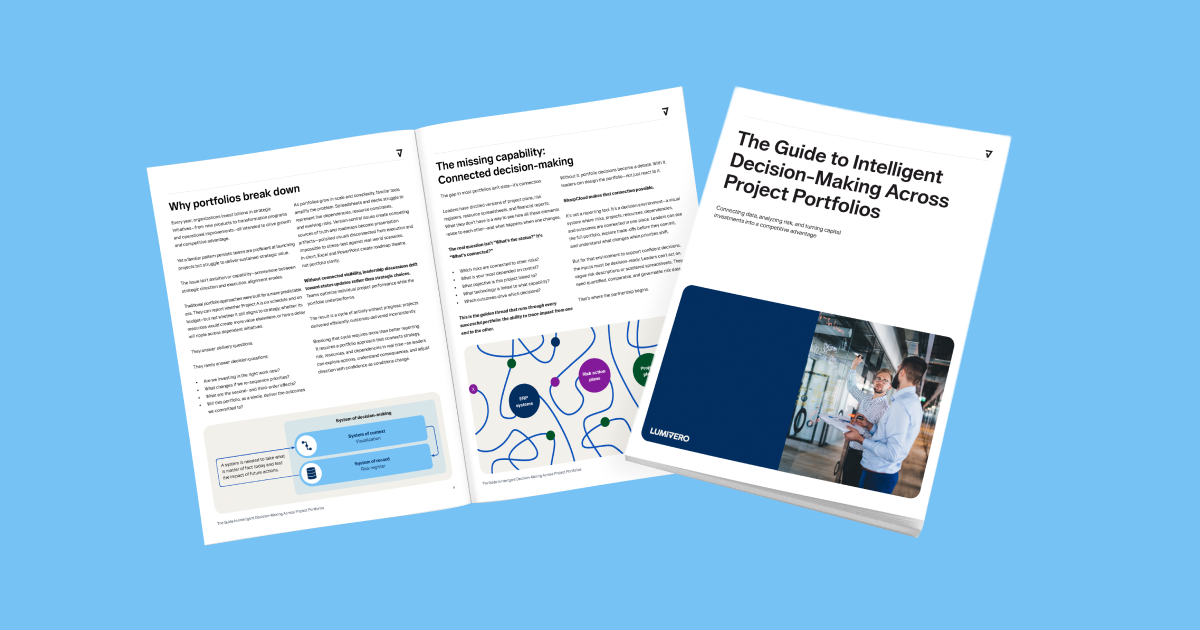
Download “The Guide to Intelligent Decision-Making Across Project Portfolios”
Discover how to create a golden thread from strategy to execution with @RISK, Predict! and SharpCloud—connecting data, aligning decisions, and analyzing risk with full portfolio visibility.
Download eBook →Benefits of a golden thread
Here’s why grasping the golden threads is essential for robust portfolio and risk management.
1. Enhanced visibility and transparency
Golden threads provide a clear and comprehensive view of how different projects and initiatives within a portfolio are interconnected. By visualizing these connections, managers can gain deeper insights into how changes in one area may impact other parts of the portfolio. This clarity enables project managers and stakeholders to make strategic choices that align with organizational goals and optimize resource allocation. By seeing the bigger picture, you can prioritize projects that offer the most significant benefits and mitigate those with higher risks.
For instance, in an automotive company, understanding how a delay in the supply chain for one component can affect the production schedule of various vehicle models is crucial for maintaining smooth operations.
2. Improved strategic alignment
Aligning projects and initiatives with the overarching strategic goals of the organization is a fundamental aspect of successful portfolio management. Golden threads help in mapping these projects directly to strategic objectives, ensuring that every initiative contributes to the broader mission of the company. This alignment ensures that resources are allocated effectively and that efforts are concentrated on areas that drive the most value, crucial for achieving long-term success and maintaining a competitive edge.
For example, if an automotive manufacturer aims to increase its market share in electric vehicles, understanding the connections between R&D projects, regulatory compliance, and market trends through golden threads can ensure that all efforts are synergized towards this goal.
3. Proactive risk management
Risk management is inherently about anticipating and mitigating potential issues before they become significant problems. Golden threads enable a proactive approach by highlighting dependencies and potential points of failure within the portfolio that might not be immediately obvious. By understanding these relationships, risk managers can develop more effective mitigation strategies to address issues before they escalate into significant problems, reducing the likelihood of disruptions and ensuring smoother project execution.
For instance, if a key supplier is identified as a critical link in the golden thread of a project, steps can be taken to diversify suppliers or develop contingency plans, thereby reducing the risk of supply chain disruptions.
4. Enhanced collaboration and communication
"Dependencies rarely confine themselves to the boundaries of individual teams or departments."
Effective portfolio and risk management require collaboration across various departments and teams. Golden threads foster a culture of transparency and communication by providing a shared understanding of how different elements are connected. By visualizing data dependencies, stakeholders can see how their work fits into the larger puzzle, promoting a sense of shared purpose and accountability.
This shared perspective encourages collaboration and ensures that all stakeholders are on the same page. In a large organization, this can break down silos and promote cross-functional teamwork, leading to more cohesive and efficient project execution.
5. Quickly understand the impact of change
In today’s volatile business environment, the ability to adapt to change is a critical success factor. Golden threads facilitate dynamic scenario planning by allowing managers to visualize and assess the impact of various changes across the portfolio. Whether it’s a change in market conditions, regulatory requirements, or internal shifts, understanding these impacts helps in crafting flexible and resilient strategies.
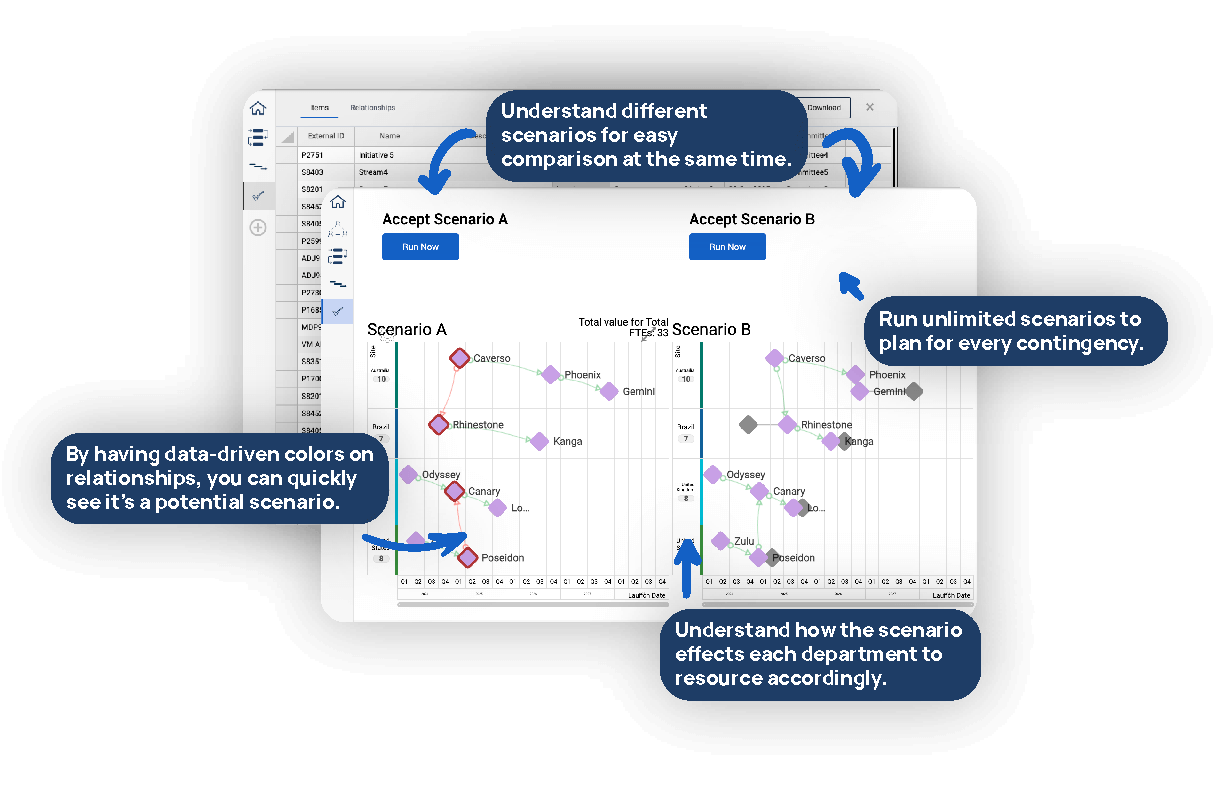
For instance, an automotive company can use golden threads to simulate the impact of new emissions regulations on its product lineup and supply chain, enabling it to adjust its strategies proactively.
6. Optimized resource allocation
Resources in any organization are finite, and their optimal allocation is essential for maximizing returns on investment. Golden threads provide a detailed view of how resources are being utilized across the portfolio and identify areas where they can be better allocated. This ensures that critical projects receive the necessary support and that redundancies are minimized.
For example, understanding the resource requirements and interdependencies of various R&D projects can help a company prioritize investments that are most likely to drive innovation and competitive advantage.
How the golden thread works within your existing Project Management platform
Here’s how you can implement the golden thread within your existing project management platform to ensure seamless alignment and efficiency.
1. Define clear objectives and key results (OKRs)
Begin by clearly defining your organization’s goals and breaking them down into actionable objectives and key results (OKRs). These OKRs should be communicated and accessible within your project management platform.
- Use the platform’s goal-setting features to document and share OKRs.
- Ensure every team member understands how their work contributes to these goals.
- Regularly review and update OKRs to reflect progress and changes in strategy.
2. Link tasks and projects to organizational goals
Ensure that every task and project within your platform is linked to specific organizational goals. This creates a clear line of sight from individual activities to the overarching objectives.
- Utilize tags or categories to associate tasks and projects with specific goals.
- Include goal-related information in task descriptions and project charters.
- Regularly review tasks and project lists to ensure alignment with strategic goals.
3. Foster transparent communication and collaboration
Transparent communication is vital for maintaining the golden thread. Use your project management platform communication tools to keep everyone informed about how their work fits into the bigger picture.
- Hold regular team meetings to discuss progress on goals and how current projects align with them.
- Use platform features like message boards, chat, and comments to share updates and insights.
- Encourage team members to ask questions and provide feedback on goal alignment.
4. Utilize real-time tracking and reporting
Leverage your platform’s tracking and reporting features to monitor progress towards goals in real-time. This helps identify any misalignments early and allows for timely adjustments.
- Set up dashboards that visualize progress towards key results.
- Use reporting tools to generate regular updates on goal achievement.
- Analyze data to identify trends and make informed decisions about project adjustments.
5. Standardize documentation practices
Consistent documentation is crucial for maintaining the golden thread. Ensure that all relevant information about goals, dependencies, and progress is documented and easily accessible.
- Develop standardized templates for project charters, task descriptions, and progress reports.
- Ensure all documentation is stored centrally within the project management platform.
- Regularly review documentation to ensure it remains accurate and up-to-date.
6. Encourage a culture of accountability and continuous improvement
Promote a culture where team members are accountable for their contributions to organizational goals and are encouraged to continuously seek improvement.
- Set clear expectations for individual and team responsibilities related to goal achievement.
- Use performance reviews to discuss contributions to organizational goals.
- Provide opportunities for professional development to enhance skills and knowledge related to goal alignment.
Benefits of the golden thread in project management
Implementing the golden thread within your project management platform offers several benefits:
- Enhanced alignment: Ensures that all actions and decisions are aligned with organizational goals.
- Improved efficiency: Streamlines processes by eliminating misalignments and redundancies.
- Increased transparency: Fosters open communication and shared understanding among team members.
- Proactive risk management: Identifies potential misalignments and risks early, allowing for timely interventions.
- Better decision-making: Provides a clear basis for making informed decisions that support organizational goals.
Find your golden threads with SharpCloud
Understanding the golden thread within your portfolio and risk management framework is essential for optimizing project outcomes, enhancing decision-making, and driving organizational success. By adopting a holistic view and leveraging systems thinking, you can navigate the complexities of modern business environments with confidence and foresight.
Holistic view and systems thinking
Golden thread embody the principles of systems thinking, encouraging a holistic perspective. When you recognize how different datasets, processes, and projects are interrelated, you can better anticipate the impacts of changes in one area on the entire system. This holistic view helps in making more informed decisions that consider the broader organizational context.
Emergent insights and innovation
Systems thinking and understanding data interdependencies often reveal emergent patterns and trends that might not be apparent when viewing projects in isolation. These insights can lead to innovative solutions and strategies that leverage the collective strengths of interconnected projects. By continuously exploring these relationships, you can stay ahead of the curve and adapt to changing market conditions.
Continuous learning and adaptation
Finally, understanding Golden Threads fosters a culture of continuous learning and adaptation. As you delve into data interdependencies, you gain deeper insights into how the organization operates and can continuously refine processes and strategies. This adaptability is crucial in a dynamic business environment where staying agile and responsive is key to long-term success.
The connected decision engine behind the golden thread
SharpCloud makes the golden thread visible—but the most resilient organizations go further, ensuring that the risk data running through that thread is also quantified, governed, and decision-ready. That's where Lumivero's integrated suite of risk and decision software comes in.
The full intelligent portfolio management cycle works like this:
- @RISK turns uncertainty into probability—translating project uncertainty into probability ranges using Monte Carlo simulation in Excel
- Predict! operationalizes quantified risk as a system of record—structuring risk into governed, standardized registers that maintain traceability from individual project decisions all the way up to portfolio strategy
- SharpCloudbrings risk, project, and portfolio data into a shared decision environment—an interactive visualization layer that lets teams see the golden thread in action, tracing connections from risk through controls, resources, dependencies, and outcomes
When all three work together, the golden thread becomes more than a management concept. Teams can trace any decision back to the strategy it serves, spot where the thread is under tension before it breaks, and move forward with the kind of shared context that replaces static reporting with live, collaborative decision-making. The result is a portfolio where nothing is disconnected — where every risk, every initiative, and every outcome is part of one coherent, traceable story.
From risk to strategy: One traceable thread
When risk is quantified, governed, and visible in context, every decision—from project level to the boardroom—connects back to the goals it serves. Weave your golden thread from risk to strategy with @RISK, Predict!, and SharpCloud.
Frequently asked questions
Each tool plays a distinct role in making the golden thread operational. @RISK quantifies the uncertainty embedded in project decisions—replacing single-point estimates with probability ranges that reflect real-world variability. Predict! structures that risk data into governed, traceable registers that connect project-level insight to portfolio strategy, ensuring every risk decision is documented and defensible. SharpCloud then visualizes the full picture—mapping how projects, risks, controls, and objectives are interconnected so stakeholders can see decisions in context rather than in isolation. When all three work together, organizations don't just understand the golden thread—they can follow it from any risk or initiative all the way back to the strategic goals it serves.
The “golden thread” concept, which aligns organizational goals, values, and vision throughout an organization, faces several challenges:
Inconsistent practices: Maintaining the golden thread can be challenging due to inconsistent practices in digital information storage and resistance to new processes across company-wide culture.
Alignment with strategy: Aligning performance management with organizational strategy is crucial. Ensuring that individual goals coordinate with the organization’s objectives can be a challenge.
Conflicting objectives: Functional objectives (such as revenues, profits, and product vs. portfolio) can introduce constraints and compromises, affecting the golden thread.
Balancing flexibility and firmness: Striking the right balance between flexibility and firmness when moving from strategy to execution is complex and critical for maximizing return on investment.
Remember, addressing these challenges helps organizations weave a strong and cohesive golden thread!
Applying the golden thread in business involves several steps:
1. Define organizational goals:
- Clearly articulate your organization’s long-term and short-term goals. These goals should align with the company’s mission and vision.
- Break down these high-level goals into specific, measurable objectives.
2. Cascade Goals:
- Communicate these goals throughout the organization. Every team and individual should understand how their work contributes to achieving these objectives.
- Align departmental goals with the overall organizational goals.
3. Performance metrics:
- Develop key performance indicators (KPIs) that measure progress toward the goals.
- Regularly track and evaluate performance against these metrics.
4. Leadership alignment:
- Ensure that senior leadership is committed to the golden thread approach.
- Leaders should model the behavior they expect from employees.
5. Employee engagement:
- Involve employees in goal-setting and decision-making.
- Encourage a sense of ownership and accountability.
6. Feedback loop:
- Establish a feedback mechanism to monitor progress and adjust strategies as needed.
- Regularly review and update goals based on changing circumstances.
The golden thread approach offers several benefits for organizations:
- Alignment: It ensures that everyone in the organization understands and works toward the same goals, creating a cohesive and focused workforce.
- Clarity: Clear goals and performance metrics help employees know what’s expected of them, reducing ambiguity.
- Motivation: When employees see how their work contributes to larger objectives, they feel more motivated and engaged.
- Efficiency: The golden thread streamlines decision-making by aligning choices with organizational goals.
- Accountability: Performance metrics hold individuals and teams accountable for results.