






Blogs
Explore insights, tips, and industry trends

Case studies
See how organizations achieve real results

eBooks and reports
Access in-depth research and expert analysis

Research
Discover original research and data-driven insights

Webinars
Join live and on-demand sessions with experts

Whitepapers
Access research and expert analysis

Academy
Build skills with structured courses and training

Certified trainers
Get expert training from certified professionals

International partners
Connect with trusted partners around the world

Knowledge center
Find guides, tutorials, and product documentation




Field placement
Manage field placements with less manual work and total visibility

Trusted by 300+ higher ed programs managing 120,000+ placements







Key challenges in field placement management
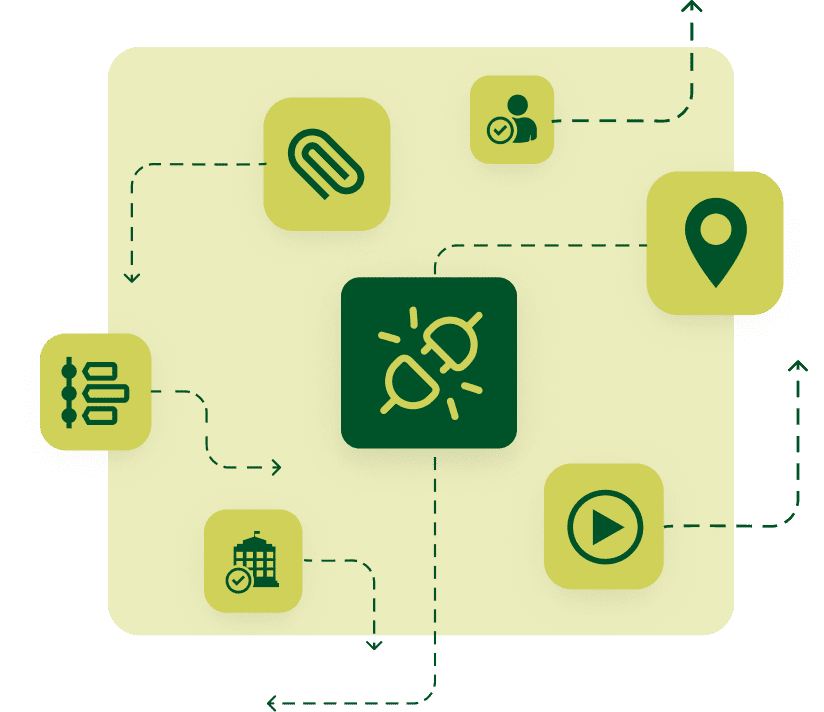
When placement data, evaluations, and compliance records are scattered across disconnected systems, small coordination gaps become systemic risks. Here's what that looks like in practice.
Disconnected systems limit visibility
Placement data, evaluations, and compliance records live across disconnected systems—making it difficult to identify issues early.
Manual coordination slows placements
Site vetting, onboarding, and communication often depend on spreadsheets, email follow-ups, and duplicated work.
Scattered data delays accreditation prep
When documentation and competency data are scattered across systems, accreditation reporting becomes reactive and time-consuming.
Why field placement breaks at scale
What modern field placement management looks like
One platform for the full placement cycle
Place and onboard


Track hours and competencies
Assess and evaluate
administrative follow-up.


Report and prove impact
Built for the disciplines that depend on field experience

Teacher education
Coordinate placements across school districts, track certification competencies, and support CAEP-aligned reporting in one connected workflow.

Social work
Track supervised hours, document CSWE competencies, and centralize evaluations and field supervision workflows.
Counseling
Manage clinical hours, supervisor credentialing, evaluations, and CACREP-aligned reporting in one centralized platform.
A better field placement experience for every stakeholder


Coordinators and
program directors

Faculty and field
supervisors

Students
From manual to managed: What changes when placement runs in one platform
| Most Preferred | |||
|---|---|---|---|
| Manual spreadsheets |
Partially tooling (placement only or assessment only) |
Unified placement platform | |
| Placement matching and site vetting |
Manual coordination across spreadsheets and email | Managed in separate systems | Centralized workflow with shared visibility |
| Affiliation agreement tracking | Shared drives and inboxes | Limited tracking | Centralized and reportable |
| Mobile hour logging | Paper forms or spreadsheets | Student-only logging | Mobile workflows with approvals |
| Competency tracking | Manual reconciliation | Separate assessment tools | Connected to placements and evaluations |
| Supervisor evaluation | Email forms and PDFs | Limited evaluation workflows | Centralized evaluations and approvals |
| Accreditation reporting | Reconstructed manually | Partial reporting visibility | Real-time reporting and audit readiness |
| Faculty visibility | Limited visibility across placements | Program-level visibility only | Real-time visibility across stakeholders |
| Stakeholder access | Separate systems and logins | Limited role-based access | Shared workflows across stakeholders |
| Number of systems involved | 5–10+ disconnected tools | 2–4 partial systems | One coordinated platform |
Real-world field placement outcomes

80% reduction in student placement time

Hundreds of placements uploaded in seconds

75% reduction in
manual effort
and reduced administrative overhead across placement workflows.
Explore resources
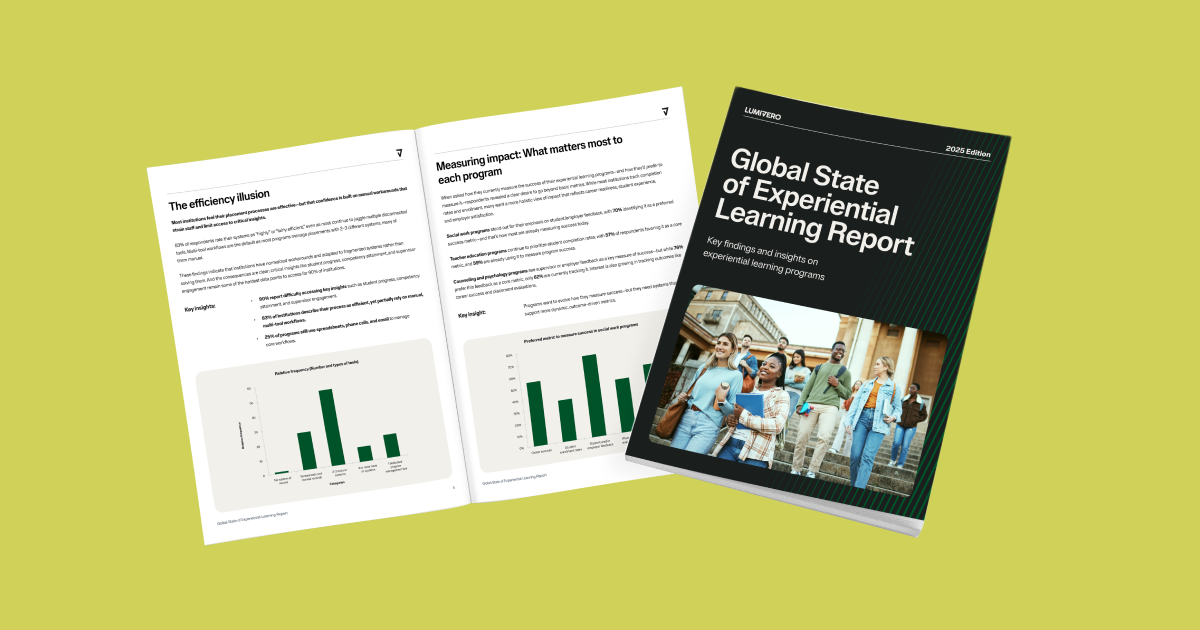
 Global State of Experiential Learning Report
 The ROI of all-in-one placement software

Modernize field placement management with one connected platform
See how Experiential Learning Cloud helps institutions centralize placements, streamline compliance, improve visibility, and support accreditation workflows at scale.
Field placement FAQs
Many programs still manage field placements through spreadsheets, email threads, and disconnected systems for hour logging, evaluations, compliance, and reporting. Institutions managing placements at scale increasingly move to centralized platforms that connect placement coordination, competency tracking, evaluations, and accreditation reporting in one workflow.
The most common challenges include managing site vetting and affiliation agreements, tracking hours and competencies across disconnected systems, coordinating evaluations between stakeholders, and preparing accreditation evidence from scattered data. These issues are often caused by fragmented workflows rather than the placement process itself.
Programs streamline field placements by centralizing site management, hour tracking, evaluations, competency mapping, and accreditation reporting into one coordinated workflow. The shift reduces administrative burden, improves visibility, and helps programs scale placements more efficiently.
While each discipline has unique accreditation and competency requirements, the operational workflow is similar: match students to sites, track supervised hours, document evaluations, and prepare accreditation reporting. Modern field placement platforms support these discipline-specific requirements within one centralized system.
Implementation timelines depend on program size, workflows, and data complexity, but many institutions go live within a single academic term using a phased onboarding approach.
Yes. Experiential Learning Cloud supports accreditation workflows for CSWE, CAEP, CACREP, and other discipline-specific standards through centralized competency tracking, evaluations, supervisor credentialing, and reporting.

How can we help you? Contact us.