








Blogs
Explore insights, tips, and industry trends

Case studies
See how organizations achieve real results

eBooks and reports
Access in-depth research and expert analysis

Research
Discover original research and data-driven insights

Webinars
Join live and on-demand sessions with experts

Whitepapers
Access research and expert analysis

Academy
Build skills with structured courses and training

Certified trainers
Get expert training from certified professionals

International partners
Connect with trusted partners around the world

Knowledge center
Find guides, tutorials, and product documentation





Mixed methods research software

Trusted by researchers around the globe












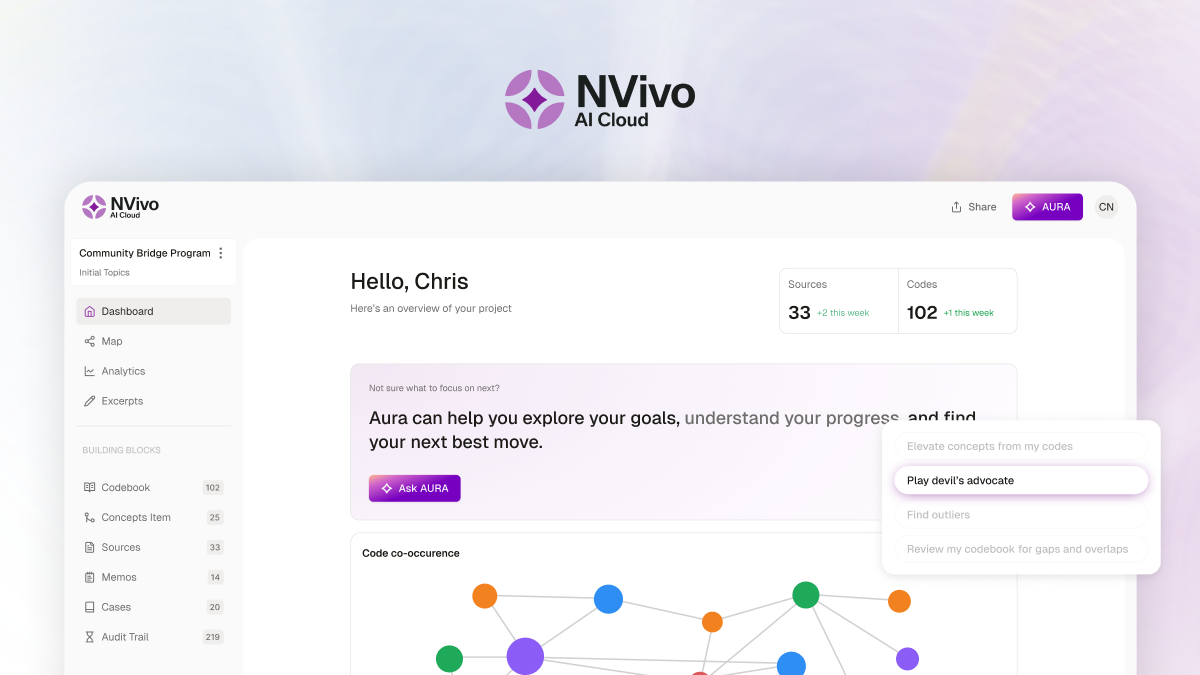
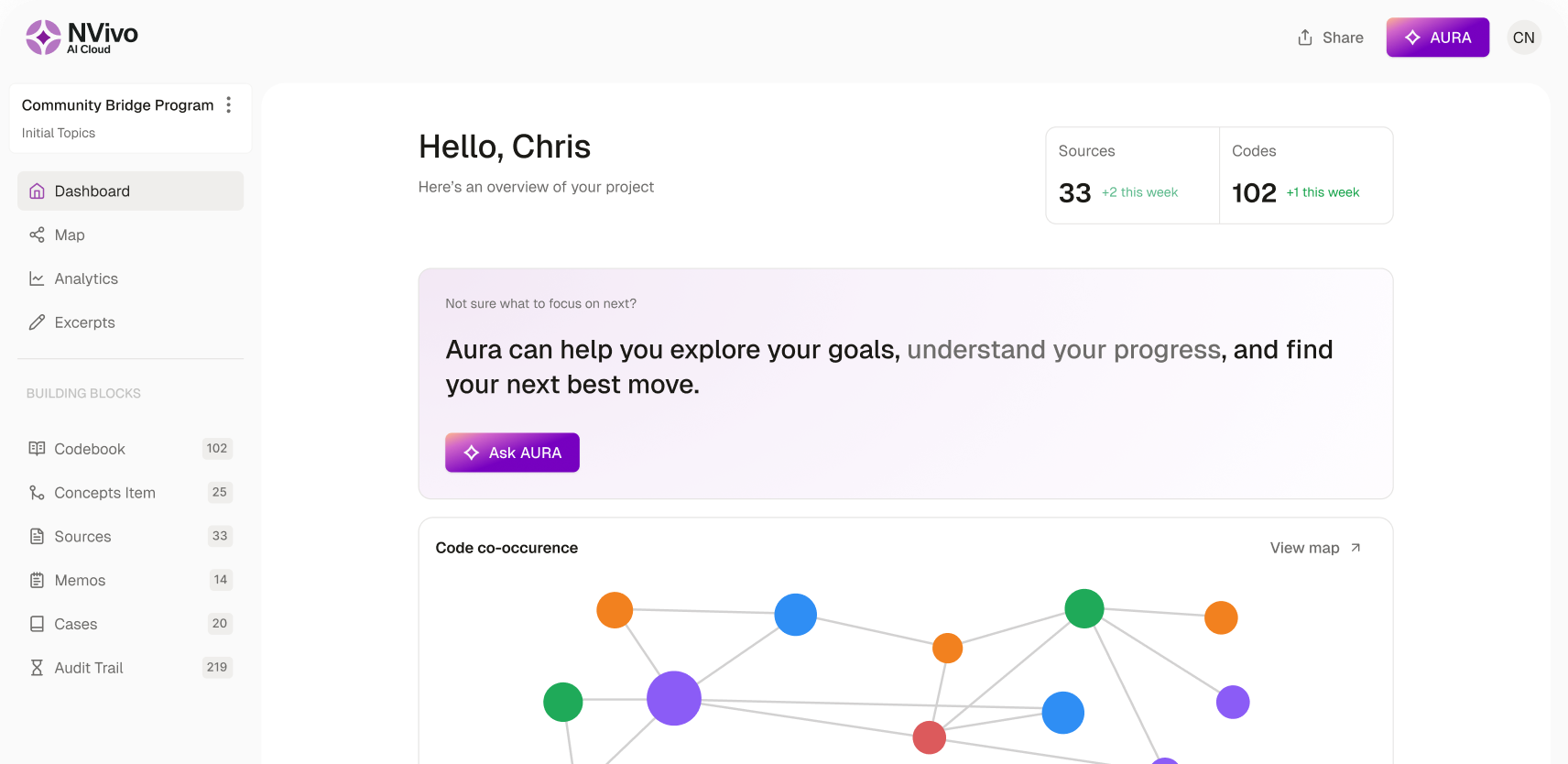
NVivo AI Cloud is here
See deeper patterns. Publish with confidence. Available now for individual researchers

Connect qualitative insight with statistical analysis
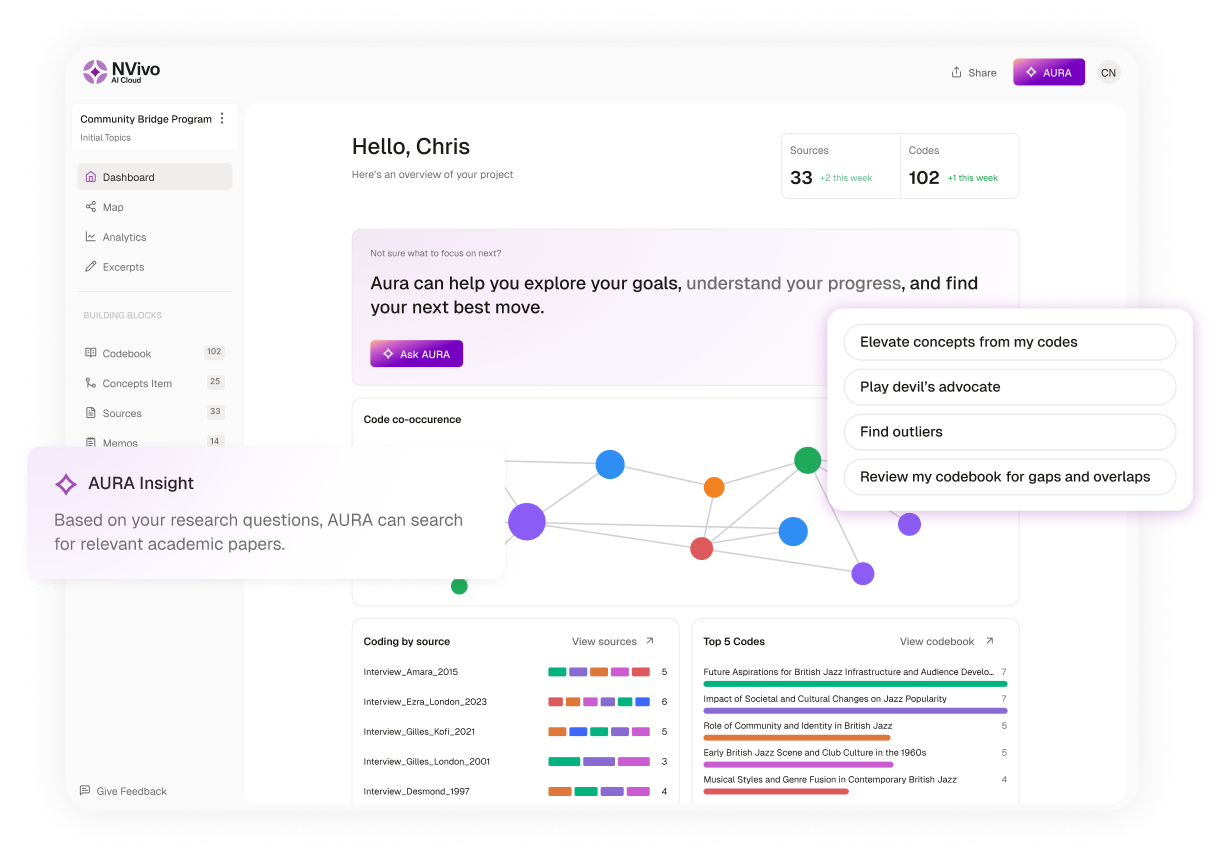
Organize and code qualitative data
Import interview transcripts, survey responses, articles, field notes, and multimedia sources into NVivo. Use coding and AI-assisted analysis to identify themes, organize qualitative findings, and structure research data alongside participant and demographic attributes.
Explore patterns across themes, cases, and variables
Analyze how themes vary across participant groups and research variables using queries, matrices, visualizations, and mixed methods analysis tools within NVivo.
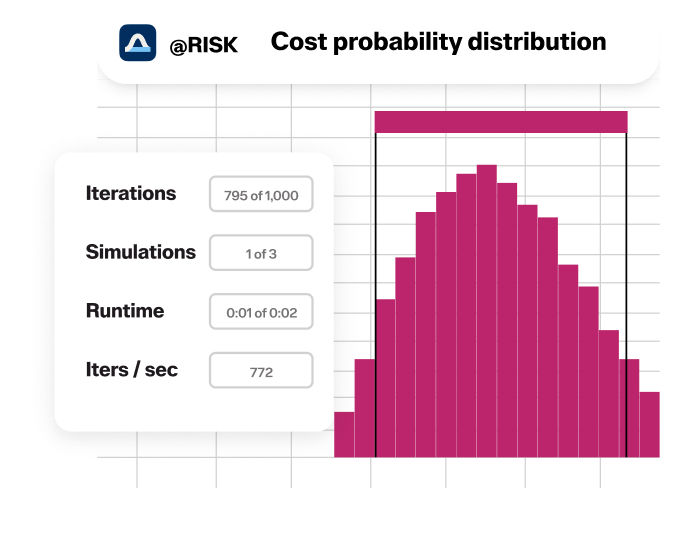
Extend analysis with advanced statistical methods in XLSTAT
Export structured research data into XLSTAT for deeper statistical analysis using methods such as regression, cross-tabulation, factor analysis, and ANOVA.
Purpose-built software for both sides of mixed methods research
Lumivero is the only research software ecosystem with dedicated tools for both qualitative and quantitative analysis. Researchers can code and structure qualitative findings in NVivo, then further validate patterns statistically in XLSTAT using regression, cross-tabulation, factor analysis, and other analytical methods.



How each tool works with in mixed methods research


Mixed methods research software trusted across disciplines

Health sciences
Analyze patient interviews and clinical feedback alongside demographic or treatment data to support evidence-based healthcare research.

Education research
Combine classroom observations, student interviews, and survey responses with academic performance and institutional data.

Social sciences
Study social behavior and public attitudes using qualitative coding alongside statistical analysis of large research datasets.

Business research
Connect customer interviews and employee feedback with survey and operational data to support strategic business decisions.
Get the most out of mixed methods research software
 What is mixed methods research? Definition, types, benefits, and challenges
 5 ways to maximize insights and efficiency in mixed methods research
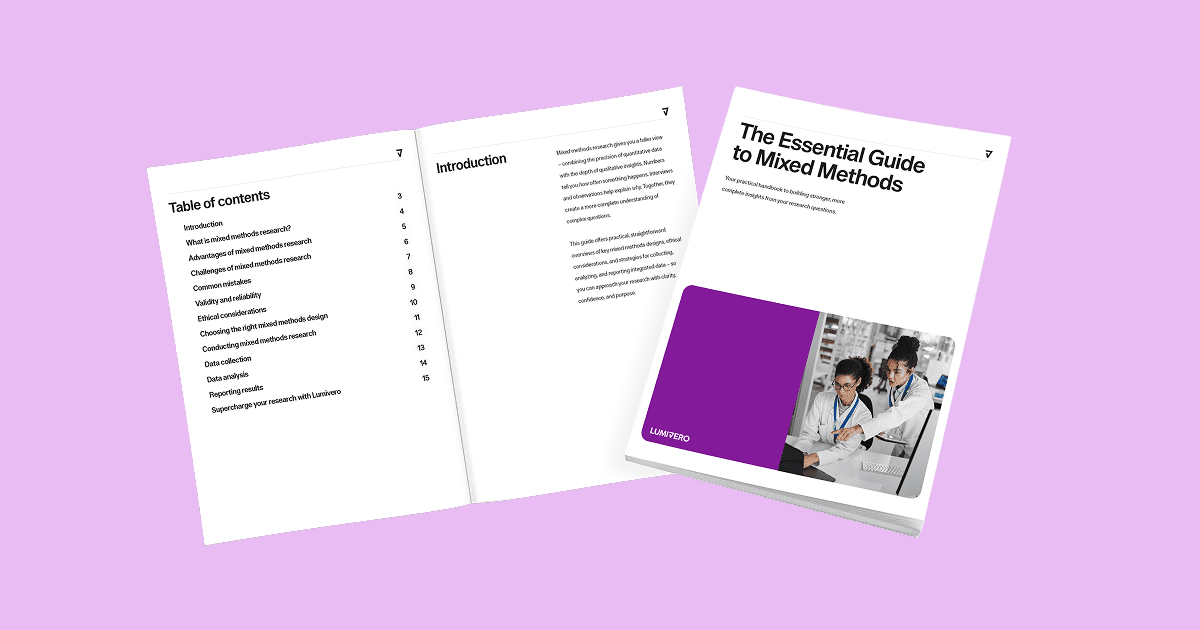 The Essential Guide to Mixed Methods
Get started with mixed methods research software
Mixed methods research FAQs
The most widely used mixed methods research software tools are NVivo, MAXQDA, ATLAS.ti, and Dedoose for qualitative analysis, and SPSS, R, and XLSTAT for quantitative analysis. Lumivero offers NVivo and XLSTAT as a complementary suite—purpose-built qualitative and quantitative tools that work together within the same software ecosystem.
Yes. NVivo supports mixed methods research by allowing researchers to analyze qualitative data alongside structured quantitative and demographic data within the same project. Researchers can import structured data files, including Excel, CSV, and SPSS files, alongside interviews, documents, surveys, and multimedia sources.
NVivo also supports framework matrices, crosstab analysis, code frequency analysis, descriptive statistics, and case classifications to help researchers compare qualitative themes across participant groups, survey responses, and demographic data within a single analysis environment.
Yes. NVivo and XLSTAT are designed to complement each other in a mixed methods workflow. Researchers can organize, code, and analyze qualitative data in NVivo, then export structured outputs and datasets into XLSTAT for deeper statistical analysis and modeling. Together, the tools help researchers connect qualitative insights with quantitative analysis within a single research workflow.
Yes, NVivo and XLSTAT are separate products with separate licenses. Both are available to purchase individually. For teams or institutions, Lumivero offers volume licensing—contact our sales team for a quote tailored to your organization's needs.
NVivo supports a wide range of qualitative and mixed methods research data, including interview transcripts, focus group discussions, open-ended survey responses, documents, PDFs, images, audio, video, spreadsheets, and structured survey data. Researchers can also import demographic and quantitative data from Excel, CSV, and SPSS files to support mixed methods analysis within the same project.
XLSTAT is Lumivero's dedicated quantitative analysis platform. It runs as an add-in within Microsoft Excel and supports regression, ANOVA, factor analysis, survival analysis, and more. For researchers running a mixed methods study, XLSTAT handles the statistical side while NVivo or ATLAS.ti handles qualitative coding and analysis.
NVivo AI Cloud is here
See deeper patterns. Publish with confidence. Available now for individual researchers.

How can we help you? Contact us.