Many organizations still struggle to connect strategy with execution and business outcomes, often relying on spreadsheets or outdated project portfolio management (PPM) solutions that haven’t adapted to today’s realities. This gap underscores the need for a modern PPM solution with strategic portfolio management (SPM) capabilities.
With a well-structured strategy and portfolio management process, organizations can achieve stronger alignment, improve resource management, and drive long-term business success. Discover how strategic portfolio management software can transform your organization’s approach to managing projects and achieving its goals.
What is strategic portfolio management?
Strategic portfolio management (SPM) is an approach that helps organizations align their projects and initiatives with their broader strategic goals. It enables business leaders to make informed, data-driven decisions by providing a structured portfolio management process to prioritize projects, allocate resources effectively, and monitor progress.
This ensures that every project in the portfolio contributes to the organization’s long-term success. By implementing SPM, companies can better connect their strategic plans with daily project execution, driving better business outcomes.
Why strategic portfolio management is important
In a world as complex, interconnected, and unpredictable as this one, the knock-on effects of a singular change in your portfolio can quickly snowball and unravel the best made plans. Ensuring that all projects and resources are aligned with strategic objectives is crucial for enterprise-wide success. Without this alignment, companies may invest in initiatives that don’t support their key goals, leading to inefficiency and wasted resources.
Strategic portfolio management (SPM) helps organizations make better decisions about which projects to invest in, ensuring alignment with their strategic priorities. It also allows for real-time visibility into project performance, helping organizations adapt to changes and maximize returns on investment. By continuously evaluating and adjusting the portfolio, organizations can optimize outcomes, improve business agility, and stay aligned with evolving market conditions and strategic objectives.
How does strategic portfolio management differ from traditional project management?
Strategic portfolio management (SPM) focuses on aligning a collection of projects and initiatives with an organization’s broader business goals. Traditional project management is centered on managing the execution and success of individual projects.
SPM ensures that resources, priorities, and investments are allocated strategically across the portfolio to achieve long-term objectives. Project management is more tactical, dealing with the day-to-day operations of a single project.
In SPM, decision-making is done at a high level, determining which projects to prioritize, continue, or stop, based on their alignment with business goals. Traditional project management focuses on completing tasks, meeting deadlines, and managing budgets for specific projects. SPM oversees risks, performance, and resources across the portfolio to maximize overall business impact.
Benefits of strategic portfolio management
- Clarity and focus: Each initiative clearly contributes to the organization’s success, with progress and business outcomes that are measurable and highly visible.
- Efficiency gains: By eliminating project duplication, reducing administrative overhead, and directing resources effectively, operations become more streamlined.
- Better decision-making: With enhanced visibility into the broader context, scenarios, and implications, organizations make more confident, informed choices.
- Improved ROI: Managing programs holistically allows a sharper focus on projects with the highest potential for delivering value, boosting overall return on investment.
Key steps to implementing strategic portfolio management
1. Define your goals
The first step in SPM is to clearly define your strategic objectives. What do you want your portfolio of projects to achieve? This can include both long-term goals (e.g., increasing market share) and short-term objectives (e.g., launching a new product). Having clearly defined goals ensures that all projects are aligned with your overall strategy.
2. Evaluate key factors
Once you’ve established your goals, identify the key factors for success. This involves assessing potential risks, available resources, and the expected value of each project. Using a structured portfolio management process will help you evaluate which projects should be prioritized based on these factors.
3. Visualize your projects
A clear overview of your projects is essential for effective SPM. Use strategic portfolio management tools to create a visual representation of your project portfolio. This can include Gantt charts, dashboards, and real-time data visualization that shows how each project contributes to the overall strategy. Portfolio management and planning help you track performance and make data-driven decisions.
4. Resource allocation
Effective resource allocation is critical in portfolio management strategies. Use your strategic goals and project evaluations to determine how best to allocate resources, such as budget, personnel, and time. Ensuring that key projects have sufficient resources increases their chances of success while optimizing resource use across the portfolio.
5. Monitor and manage your portfolio
Once your portfolio is in motion, regular monitoring is essential. This involves tracking performance metrics, identifying potential bottlenecks, and adjusting as needed. With real-time visibility through software tools, you can monitor progress continuously and adjust resources or priorities in response to changing market conditions or strategic shifts.
Common challenges in implementing strategic portfolio management
Implementing strategic portfolio management (SPM) often comes with several challenges:
- Misalignment with business goals: Ensuring that all projects within the portfolio align with overarching business objectives can be difficult, especially in large organizations with complex ecosystems. Without proper alignment, resources may be misallocated to low-priority projects.
- Lack of real-time data visibility: Gaining a clear view of the entire portfolio and integrating data from various systems can be challenging. Inconsistent data or siloed information can limit effective data-driven decision-making.
- Resource constraints: Balancing resource allocation across multiple projects is a common issue. Limited resources require careful prioritization. Organizations may struggle with resource bottlenecks, leading to delays and inefficiencies.
- Stakeholder engagement: Engaging and aligning all relevant stakeholders can be complex, especially when managing diverse teams or departments. Poor communication can lead to conflicting priorities and hinder overall performance.
- Resistance to change: Implementing SPM requires shifting from a project-by-project mindset to a more strategic, portfolio-level approach. This cultural shift can be met with resistance or lack of buy-in from teams and leadership.
- Ongoing monitoring and adaptation: SPM requires continuous oversight and adjustments as business objectives evolve. Keeping the portfolio agile while ensuring long-term strategic goals are met is an ongoing challenge.
Overcoming SPM challenges with software
Strategic portfolio management software helps overcome these challenges by offering tools for data-driven decision-making, real-time tracking, and visualization. With the right portfolio management software, you can easily link projects to strategic objectives, monitor performance, and adjust resources dynamically. Project portfolio management software also supports collaboration, helping stakeholders remain aligned with key goals. Here's how:
- Centralized data and visibility: SPM software integrates data from various projects and sources, giving stakeholders a holistic, high-level view of the entire portfolio. This helps in tracking performance, identifying risks, and ensuring all projects align with strategic objectives.
- Resource management: With real-time insights into resource allocation, SPM software allows organizations to optimize resource distribution across projects. This prevents bottlenecks and ensures that high-priority initiatives are adequately supported.
- Scenario planning and analysis: Software tools often include scenario modeling features, enabling managers to simulate different project outcomes and make informed decisions about prioritization, risk management, capacity planning, and resource adjustments.
- Improved collaboration: SPM software fosters better communication among teams and stakeholders by providing a shared platform for discussing goals, progress, and potential adjustments. This reduces silos and improves alignment.
- Agility and adaptability: By providing real-time data and insights, SPM software helps organizations adapt quickly to changes in strategy, market conditions, or internal needs, keeping the portfolio dynamic and responsive.
How does software improve strategic portfolio management?
- Integration with other tools: Modern SPM software integrates seamlessly with other tools like project management and CRM systems, ensuring a cohesive workflow.
- Scalability: As your organization grows, so does the need for a scalable software solution that can handle larger portfolios and complex projects.
- Customization: Tailor the software to fit your specific business needs, ensuring that the strategic plans you implement align with your goals.
- Real-time data: Software provides real-time insights into performance, helping you quickly adapt to changes in the business landscape.
Best practices for strategic portfolio management
- Use templates: Leverage strategic portfolio management templates to standardize the process across projects.
- Engage stakeholders: Involve key stakeholders throughout the portfolio planning process to ensure alignment.
- Regular reviews: Conduct regular reviews of the portfolio to ensure it remains aligned with business objectives.
- Realistic timelines: Set achievable timelines and milestones for your projects to maintain momentum.
How SharpCloud software improves strategic portfolio management
SharpCloud software significantly enhances strategic planning and portfolio management by providing powerful visualization and collaboration features that align projects and goals more effectively.
Here's how it helps:
- See the big picture and how everything is connected
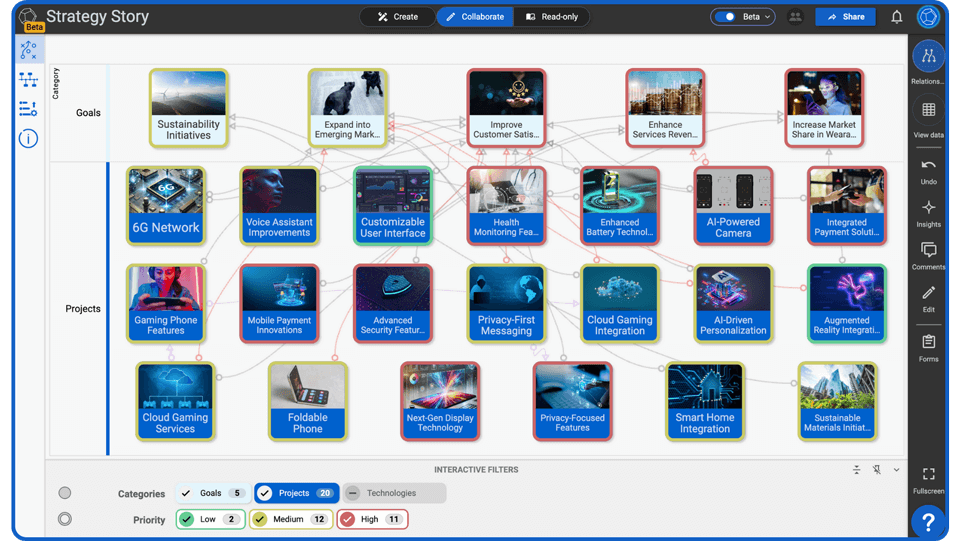
SharpCloud enables you to visualize your entire portfolio in one place, allowing you to see how various projects, resources, and strategic initiatives are interconnected. This broader view helps you understand the impact of each project on the overall business strategy, ensuring alignment between activities and long-term objectives.
- Stay connected to your goals
With SharpCloud, you can link projects directly to your strategic goals, ensuring every initiative supports your broader business objectives. The software allows for real-time updates, so you can continuously track progress, stay aligned with your strategic vision, and quickly adjust priorities as needed.
- Find hidden blockers to project success
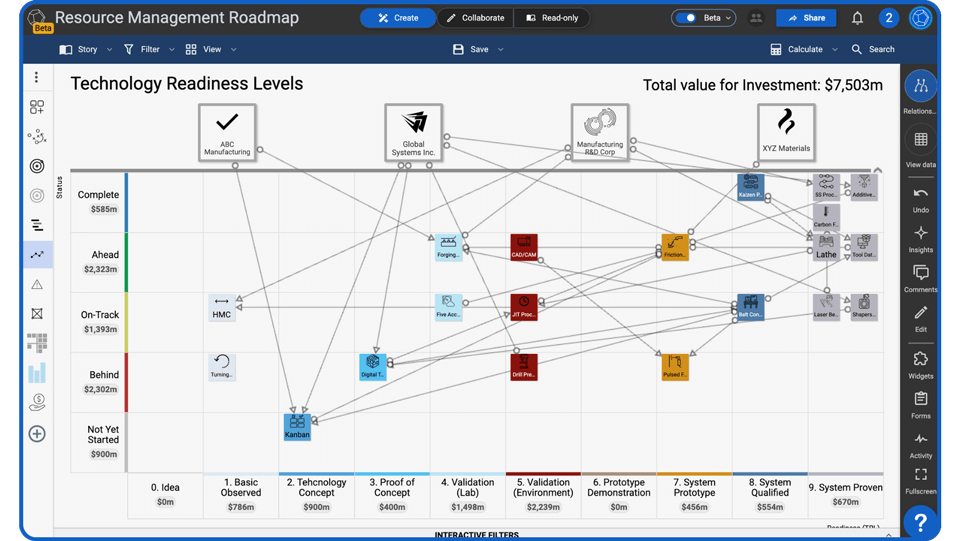
SharpCloud’s interactive visualizations and data insights make it easier to identify risks, resource constraints, or misalignments that may be obstructing project success. By uncovering these hidden blockers, you can address them proactively, improving overall project performance and outcomes.
- Holistic knowledge all in one place
SharpCloud centralizes all relevant information—such as project data, timelines, and KPIs—into one easily accessible platform. This holistic view of your portfolio ensures that everyone, from stakeholders to team members, has the same information, fostering better collaboration, communication, and informed decision-making.
The connected decision engine
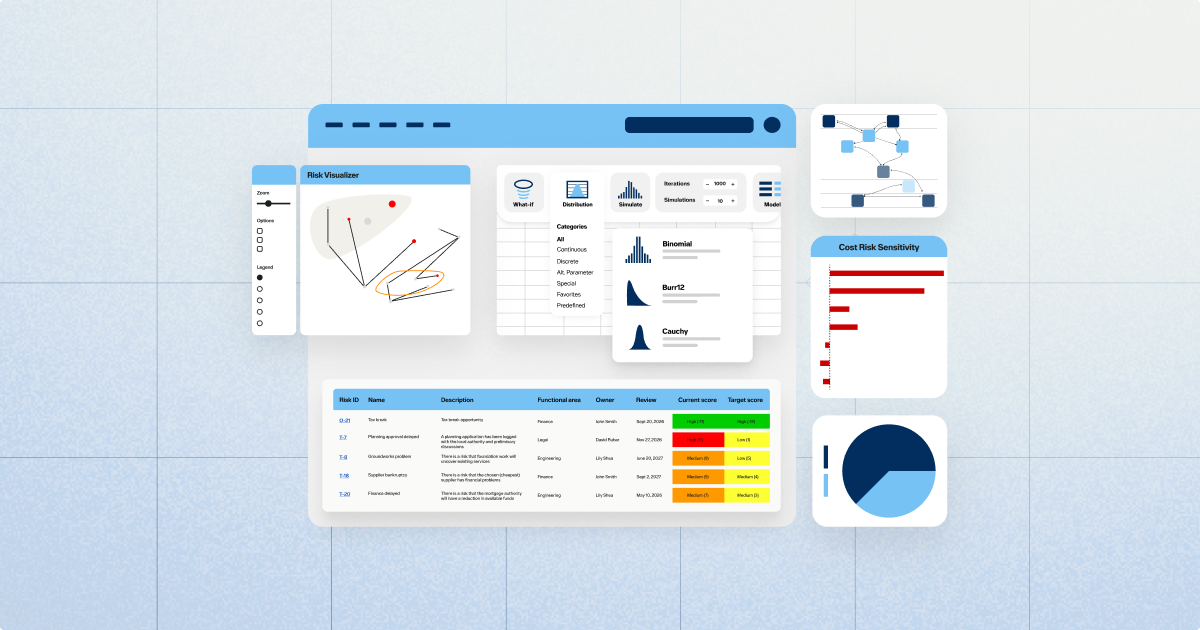
SharpCloud becomes even more powerful when combined with Lumivero's integrated suite of risk and decision solutions. Portfolio risk doesn't become useful because it's documented—it becomes useful when leaders can act on it because it's quantified, comparable across the portfolio, and visible in context. The full intelligent portfolio management cycle works like this:
- @RISK turns uncertainty into probability—using Monte Carlo simulation in Excel to show ranges and likelihoods instead of single-point guesses, giving analysts a rigorous foundation for cost, schedule, and performance modeling.
- Predict! operationalizes quantified risk as a system of record—standardized registers, governance, and portfolio visibility that connects strategy with project-level insight. It makes risk decision-ready.
- SharpCloud brings risk, project, and portfolio data into a shared decision environment—an interactive visualization system that lets teams see decisions in context. It makes decisions possible.
In that shared environment, decisions become a working conversation. Teams can:
- Create alignment around shared priorities, trade-offs, and outcomes
- Understand impact before they commit
- Move decisions forward with confidence using dynamic, executive-ready views
- Trace the golden thread from risk through controls, resources, dependencies, and outcomes
Together, @RISK, Predict!, and SharpCloud give organizations the analytical depth, governance structure, and visual clarity needed to transform how they plan, prioritize, and execute — at every level of the portfolio.
Transform the way you plan and prioritize projects
Strategic portfolio management only works when strategy, risk, and execution move together. By combining structured SPM processes with connected tools like @RISK, Predict!, and SharpCloud, you can build a portfolio that's dynamic, defensible, and aligned from the project level to the boardroom.
Ready to get started?
Connect projects to strategy, visualize dependencies, and make smarter, data-driven decisions with SharpCloud, or explore Lumivero’s full risk and decision solution portfolio.