







Key takeaways
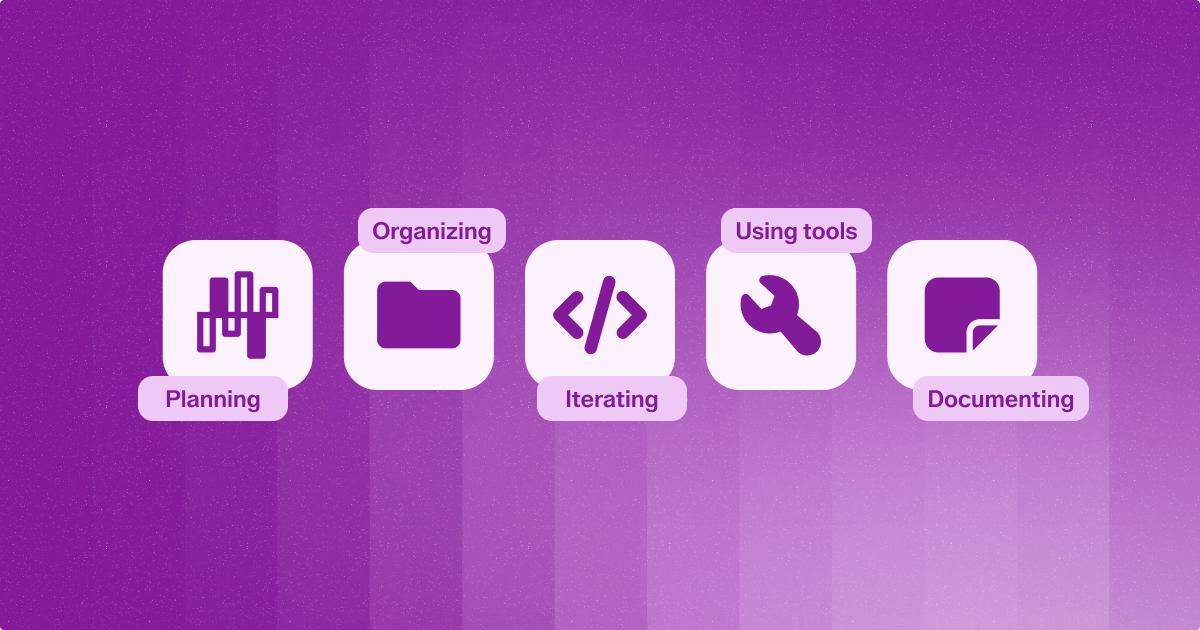
The difference between a frustrating first qualitative project and a productive one almost always comes down to process, not talent. Experienced researchers consistently point to five habits they wish they had adopted sooner: defining a clear analytical framework before diving in, organizing data from the start, coding iteratively instead of trying to get it perfect in one pass, using dedicated software to scale the work, and documenting analytical thinking along the way. Qualitative data analysis tools like NVivo and ATLAS.ti make each of these practices easier to sustain—so you can focus on meaning, not logistics.
Most qualitative researchers can point to a moment in an early project where everything felt unwieldy—transcripts piling up, codes multiplying without logic, and a creeping sense that the analysis was getting away from them. And when those same researchers look back years later, they almost always identify the same handful of habits they wish they'd adopted from day one.
Let’s look at some patterns and processes that separate a painful first project from a productive one.
Common mistakes newer researchers make
Qualitative data analysis is the systematic process of examining non-numerical data—interviews, field notes, open-ended survey responses, documents, media—to identify patterns, themes, and meaning. Unlike quantitative analysis, which relies on statistical procedures applied to structured datasets, qualitative analysis is fundamentally interpretive. The researcher is the instrument, making judgments about what matters, what connects, and what a body of evidence means.
It's a process with a lot of moving parts—and a lot of room for things to go wrong. Nearly every researcher makes these kinds of mistakes at least once.
Diving into data without a plan
The most common mistake is jumping straight into transcripts without first defining clear research questions, choosing a coding approach, or sketching an analytical framework. It feels productive—you're engaging with data—but it leads to inconsistent coding, scope creep, and the painful realization weeks later that you need to start over with a different structure. A little planning at the outset prevents a lot of rework downstream.
Treating coding as a one-pass task
Many new researchers try to build a perfect codebook on the first read-through of their data. They want every code to be precise and final before moving to the next transcript. But qualitative analysis doesn't work that way. Understanding develops over multiple passes, and a codebook that looks right after three interviews may look completely wrong after ten. Trying to get it perfect the first time creates rigid, premature categories and misses the emergent themes that only surface through iteration.
Keeping everything in their head
Early-career researchers frequently skip memoing—the practice of writing down reflections, decisions, and evolving interpretations as they code. They remember why they created a code or merged two themes, so writing it down feels redundant. But memory is unreliable, and when it comes time to write up findings or defend analytical choices to a committee or reviewer, there's no trail to follow.
The 5 fundamentals experienced researchers swear by
The mistakes above stem from skipping foundational habits that experienced researchers take for granted. The five practices below cover the things seasoned qualitative researchers wish someone had made them do from the very beginning.
1. Start with a clear analytical framework
Your framework should reflect the methodology you're working within. Thematic analysis, grounded theory, and framework analysis each suggest different starting points. A deductive approach begins with predefined codes drawn from theory, an inductive approach lets codes emerge from the data, and most real projects use a hybrid. The important thing is to make that choice deliberately rather than discovering your approach by accident halfway through.
In NVivo, the Framework Matrix provides a structured way to map cases against themes from the outset—especially useful for applied policy or health research. In ATLAS.ti, the Code Manager lets you build and organize a hierarchical codebook before you begin coding, giving your analysis a clear skeleton to work from.
2. Organize data from the beginning
Centralize everything—interviews, field notes, documents, images, secondary sources—in one system, and tag it consistently by participant, date, source type, or whatever dimensions matter for your study. The goal is to make any piece of data findable and cross-referenceable without digging through nested folders on your desktop.
NVivo's source classification sheets let you attach structured metadata—demographics, interview dates, site locations—directly to each document, making it easy to filter and compare sources along any dimension. ATLAS.ti's Document Manager and Document Groups offer similar capability, letting you organize and filter your source library without losing the ability to work across the full dataset.
3. Code iteratively, not perfectly
The temptation to get coding right the first time is strong, but it rests on a false assumption: that you can fully understand your data before you've finished reading it. Meaning emerges through repeated engagement, and your codebook should evolve alongside your thinking. Give yourself permission to be messy in early passes and precise in later ones.
NVivo's coding stripes offer a visual way to see how densely you've coded across sources, making it easy to spot gaps between passes. ATLAS.ti's Code-Document Table provides a bird's-eye view of code frequency across your dataset, helping you identify where themes are clustering and where your codebook might need restructuring.
4. Use tools that scale with your analysis
Beyond basic data management, modern qualitative data analysis software increasingly offer AI-assisted features that can accelerate the process: auto-coding large datasets, tagging sentiment, and surfacing thematic clusters so you can focus your energy on interpretation and meaning-making. The researcher still drives the analysis; the software helps you cover more ground.
Both NVivo and ATLAS.ti, compared to other QDA software, include AI-assisted features that accelerate the coding process—generating code suggestions, summarizing content, and surfacing early patterns across large datasets—while keeping the researcher fully in control of what's accepted or refined. ATLAS.ti goes a step further with conversational AI tools that let you interact directly with your data, explore patterns, and prompt deeper analytical reflection in real time.
Tools that support scalable analysis should help you:
- Manage and query large, complex datasets in one place
- Accelerate early-stage coding with AI-assisted features
- Visualize patterns and relationships across sources
- Maintain methodological rigor as your project grows
5. Document your thinking as you go
An audit trail does three things. It strengthens the transparency and credibility of your findings by showing reviewers that your conclusions rest on a visible reasoning process. It makes writing up results dramatically faster, because the narrative of your analysis is already captured in your memos. And it protects you—when a committee or peer reviewer asks how you arrived at an interpretation, you can point to documented evidence instead of scrambling to reconstruct your thinking.
NVivo's memo and annotation features let you link reflections directly to specific sources, codes, or passages, so your thinking stays connected to the evidence that prompted it. ATLAS.ti's Memos and Comments serve a similar function, allowing you to attach analytical notes to individual quotations, codes, or documents and retrieve them later as part of your write-up.
Build stronger research habits from day one
The researchers who produce the strongest qualitative findings are disciplined about structure, iteration, and documentation from the very start. With powerful QDA tools like NVivo and ATLAS.ti, there's less excuse than ever for a painful first project. The fundamentals haven't changed—clear frameworks, organized data, iterative coding, scalable tools, and documented thinking—but the software available to support them has never been better.
The five habits that separate strong qualitative research from frustrating first projects:
- Define your framework and research questions before you start coding
- Centralize and tag your data from day one
- Embrace iterative coding—expect your codebook to evolve
- Use dedicated software to manage volume and complexity
- Memo early and often to build a credible audit trail
Start with the basics, and the rest will follow.
Get the tools to support your research
Ready to bring more structure, rigor, and clarity to your qualitative analysis? NVivo and ATLAS.ti give you the foundation to work smarter from your very first project—so you can focus on the insights that matter.