









Key takeaways
Scaling global research requires a careful balance between methodological rigor and operational flexibility. Large projects like the Gallup World Poll succeed by combining standardized research frameworks, advanced survey-design tools, enterprise-level quality control, and multi-mode data collection that works even in low-connectivity environments. With platforms like SurveyToGo, research teams can collect representative data across diverse populations while maintaining transparency, reliability, and efficiency.
Global research programs are expanding rapidly in both scope and complexity. Organizations increasingly need reliable insights from populations across continents, cultures, and connectivity conditions, but achieving that scale requires more than large field teams—it demands standardized processes, strong quality controls, and technology that works reliably in almost any environment.
The Gallup World Poll is one of the most ambitious research initiatives in the world. Conducted annually across more than 140 countries, the project gathers probability-based data that informs global indices, policy decisions, and development programs.
In a recent discussion, Jay Loschky, Gallup’s Middle East Director, shared how Gallup approaches the challenge of scaling global research while maintaining methodological rigor—and why technologies like SurveyToGo play a critical role in making that possible.
The scale of global, probability-based research
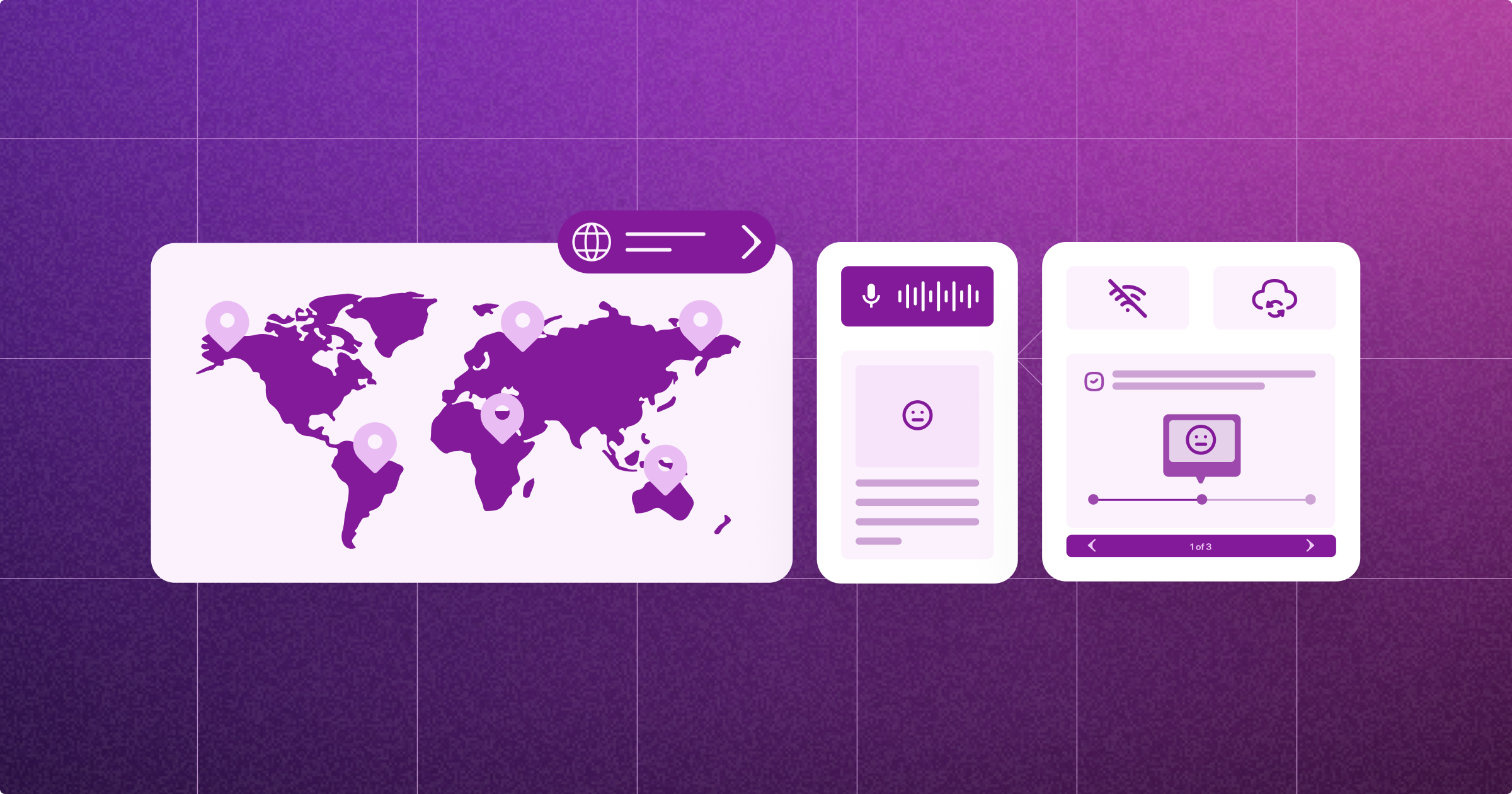
Large international surveys must operate across dramatically different environments—from highly connected urban centers to remote regions where internet access may be limited or unreliable. Capturing representative data at this scale demands a flexible, field-tested approach.
The Gallup World Poll reflects this reality, collecting representative data across a vast range of geographies and cultures. As Loschky explained, “We have more than 160 countries in our global data set and we're now in our 20th year working in at least 140 countries every single year.” That level of reach isn’t incidental—it’s the result of deliberate methodological choices and an intentional investment in time and resources—what ultimately makes their research best-in-class.
At the core is a commitment to probability-based sampling rather than convenience samples. Instead of relying on opt-in panels or purely online methods, the study is designed to reach people authentically, wherever they are in the world.
“The World Poll is not an opt-in study and it's not an online panel. We're doing things the hard way and we're doing things the right way. It's a probability-based study performed either in person or over the phone to ensure that we truly reach the most unreachable respondents,” said Loschky.
This highlights why field-based research methods remain essential, even in an increasingly digital world. Many communities cannot be reached through online surveys alone, making in-person and offline data collection critical for truly representative global insights.
The impact of this work extends far beyond data collection—Gallup World Poll insights power major global indicators, including the World Happiness Report, Climate Change and Wellbeing Around the World Report, and The Global Findex Report.
Standardization as the foundation of scalability
Running surveys across more than 140 countries introduces a major operational challenge: ensuring that every interview is conducted consistently so results remain comparable.
For Gallup, standardization has always been central to their approach. As Loschky noted, “From the very beginning, we knew that standardization was going to be the key to running a project of this scale.” Without consistent processes, even small differences in survey programming or execution could compromise cross-country comparisons.
To address this, Gallup relies on a centralized survey structure that can be deployed globally. Rather than building and managing separate versions of a survey, teams work from a single, unified structure. As Loschky described, “Today we create a single core script in SurveyToGo where logic, skips, QC flags, and a large amount of other code are all included in a single place.”
This essential approach, made possible with SurveyToGo, allows teams to:
- Maintain consistent survey logic across countries
- Adapt surveys for local languages and modes
- Reduce programming errors and deployment delays
- Ensure methodological consistency at global scale
Centralizing survey programming also makes large international projects far easier to manage and replicate.
Enterprise-grade quality control
At global scale, data quality cannot be left to chance. Research teams need robust mechanisms to verify that interviews are conducted correctly and consistently.
For Gallup, that means building extensive safeguards directly into the fieldwork process. As Loschky explained, “We have created dozens of metric flags that identify every type of potential issue in the field,” allowing teams to detect and address problems early—before they impact the integrity of the dataset.
Key quality-control techniques include:
- Metric flags to detect irregular interview behavior
- Item-level timestamps to confirm appropriate interview pacing
- GPS verification to confirm interviewer location
- Audio recordings for audit and validation
“We also have timestamps that we use in a variety of ways at the item level duration… You want to know if every single item could have been asked, if the interviewer actually took enough time to ask every single item correctly,” explained Loschky.
Together, these layered quality controls built into SurveyToGo help ensure interviews are authentic, complete, and methodologically sound—while reducing the costly risk of needing to repeat fieldwork.
Multi-mode flexibility without fragmenting your infrastructure
Global surveys rarely rely on a single data collection method. Depending on location and infrastructure, research teams may need to combine multiple survey modes to reach respondents effectively.
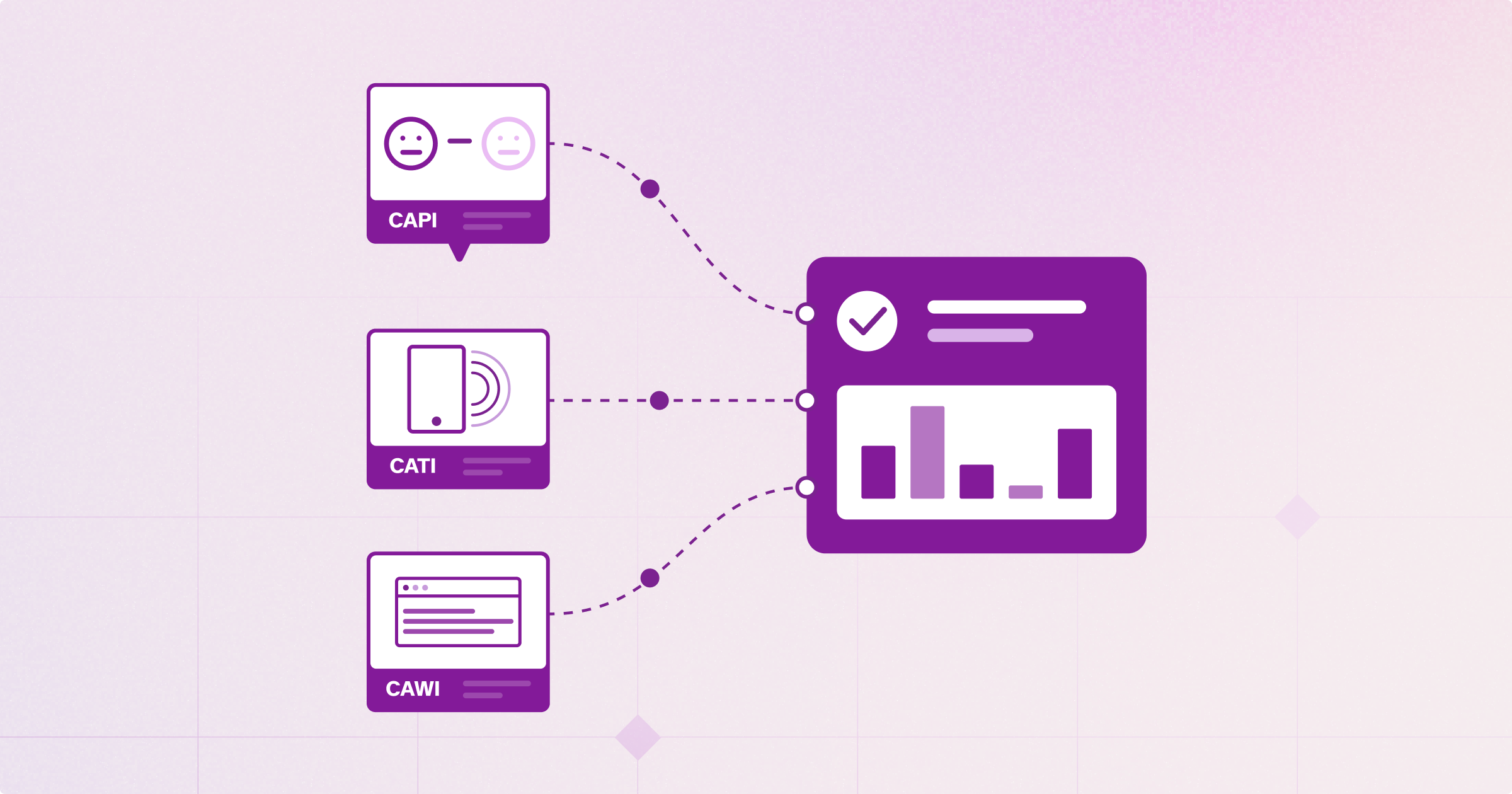
For Gallup, this means using in-person and telephone interviewing depending on local conditions. As Loschky explained, “The lion's share of that has been [computer-assisted personal interviewing – CAPI], but we also have done hundreds of thousands of surveys using [computer-assisted telephone interviewing – CATI].”
Supporting multiple modes within a single platform offers several advantages. With SurveyToGo, research teams gain:
- Consistent survey logic and structure across channels
- Simplified survey management and deployment
- Reliable offline data collection in low-connectivity regions
- Reduced technology fragmentation and operational overhead across research teams
This flexibility allows organizations to reach respondents wherever they are, while maintaining a unified research infrastructure.
Technology and human expertise working together
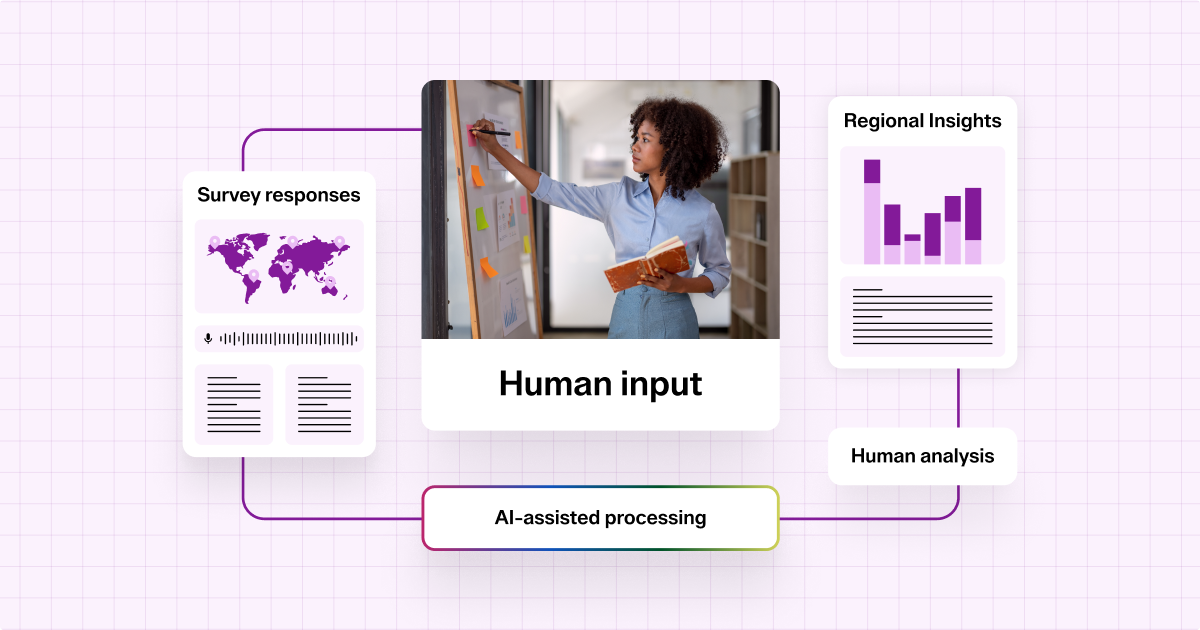
Artificial intelligence is increasingly shaping many aspects of research workflows—from coding open-ended responses to detecting anomalies in survey data.
“AI can recognize patterns and summarize research… so with AI we can count on quicker analysis and quicker insights,” noted Loschky. These capabilities make it possible to accelerate parts of the research process, particularly in data analysis and pattern recognition.
At the same time, AI does not replace the need for human interpretation. As Loschky emphasized, “Ultimately, it takes humans to understand humans and to interpret their nuances.”
Interpreting public opinion—especially across cultures—requires context, judgment, and experience that technology alone cannot provide.
The most effective research strategies combine:
- Advanced survey technologies
- AI-assisted analysis
- Experienced researchers who understand context and nuance
The result is a process that is both faster and more insightful.
What it takes to scale global research
Projects like the Gallup World Poll demonstrate what it truly takes to operate global research programs at scale.
Successful initiatives rely on several key components:
- Standardized survey design to maintain comparability across countries
- Centralized programming and infrastructure for efficient deployment
- Enterprise-grade quality controls to safeguard data integrity
- Multi-mode data collection to reach diverse populations
At the same time, in-person interviewing and offline data collection remain essential for reaching communities that digital-only methods miss.
When these elements come together, research organizations can generate insights that are representative, verifiable, and globally meaningful.
Scale global research with confidence
SurveyToGo enables research organizations to collect high-quality data anywhere in the world—whether surveys are conducted in person, by phone, or online. With offline capability, advanced quality controls, and multi-mode flexibility, research teams can capture authentic voices while maintaining rigorous standards.
See how SurveyToGo helps research teams scale global surveys with confidence.