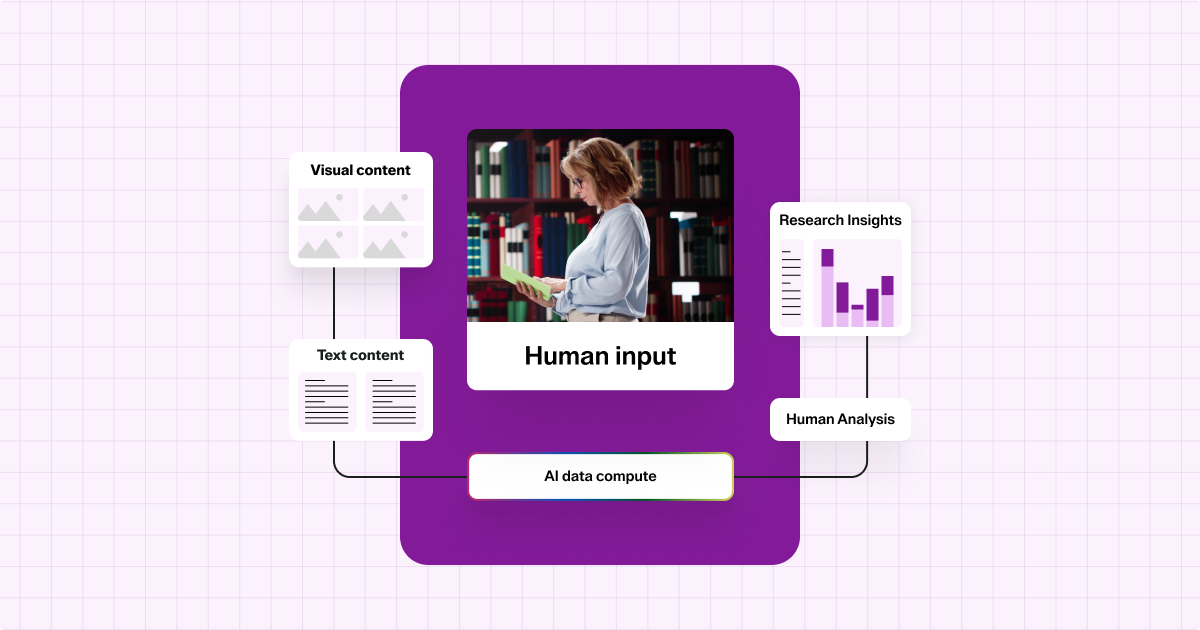
Qualitative data collection focuses on understanding experiences, meanings, and behaviors through methods such as interviews, focus groups, observations, and document analysis. Effective data collection requires clear research questions, ethical awareness, and the use of reliable tools for recording, organizing, and analyzing information. Careful planning, reflexivity, and transparency help ensure that qualitative data accurately represent participants’ perspectives and support credible, contextually grounded findings.
Qualitative data collection focuses on gathering non-numerical information that helps researchers understand experiences, behaviors, and perspectives. Unlike in quantitative research, qualitative research often involves methods such as interviews, focus groups, and observations that capture depth and detail rather than measurement. This type of data helps explain the “why” and “how” behind phenomena, offering insights that numbers alone cannot provide.
Effective qualitative data collection requires thoughtful planning, ethical consideration, and tools that support accurate recording and analysis. By choosing suitable methods and maintaining consistency throughout the process, researchers can collect meaningful data that supports interpretation and strengthens the overall quality of their studies.
Looking to turn findings into impact? Discover Lumivero’s research tools, including NVivo and ATLAS.ti, that help you advance knowledge with confidence.
Qualitative data collection is the process of gathering detailed, descriptive information that captures people’s thoughts, emotions, and experiences in their natural settings. Unlike quantitative approaches that focus on measurement and numerical comparisons, qualitative data collection seeks to understand meaning and context. Researchers use open-ended questions, observations, and written or visual materials to collect data that reveal patterns of behavior, language use, and decision-making.
The process can occur in various forms, from one-on-one interviews to group discussions or the analysis of existing documents. In all cases, the goal is to obtain information that reflects participants’ viewpoints in their own words. This approach values the richness and complexity of human experience rather than trying to simplify it into variables.
Qualitative data collection often involves iterative cycles, where researchers gather, review, and refine data as the study progresses. For example, early interviews might reveal themes that shape later questions or guide further observation. This flexibility allows qualitative research to adapt to new insights as they emerge.
Researchers must also maintain detailed records, including field notes, transcripts, and other materials that ensure transparency and traceability. Attention to ethical considerations, such as informed consent and confidentiality, is integral to every stage of the process.
Through careful planning and reflexive engagement, qualitative data collection helps build a deep understanding of social and cultural phenomena. The resulting data provide the foundation for analysis and interpretation, revealing insights that contribute to theory development, program evaluation, and policy decisions.
Qualitative data collection is important because it provides insight into how people interpret their experiences and the meanings they attach to them. While quantitative data can show patterns or correlations, qualitative data explains the context behind those patterns. It helps researchers understand motivation, reasoning, and perception—factors that are often invisible in numerical results.
In applied research, qualitative data collection supports the development of programs, products, or policies that better align with people’s needs. For example, interviews with patients can uncover communication barriers in healthcare, while classroom observations can reveal how students engage with instructional materials. These insights can inform targeted improvements that purely statistical findings might overlook.
Another reason qualitative data collection matters is its ability to capture diversity in experience. Instead of forcing responses into predefined categories, it allows participants to express themselves in their own terms. This flexibility helps identify perspectives that may be underrepresented or overlooked in larger-scale surveys.
Qualitative data collection also strengthens interpretation by revealing contradictions or tensions within human behavior. Through iterative data gathering and analysis, researchers can refine their understanding as new themes emerge. The richness of these findings supports the creation of grounded theories and enhances the credibility of research conclusions.
By attending to voices, experiences, and contexts, qualitative data collection ensures that research reflects the complexity of real-world situations. This process adds depth to evidence-based decision-making and contributes to more socially and culturally informed outcomes.
Qualitative researchers use several methods to collect qualitative data, each suited to different research goals and contexts. Qualitative research methods help gather detailed accounts of experiences, opinions, and interactions that reveal how people make sense of their lives. Choosing the right method depends on the nature of the research question, the setting, and the level of participant involvement.
Common qualitative methods for collecting qualitative data include:
Each method offers distinct advantages, practical considerations, and strategies for ensuring the reliability and richness of the data collected.
Qualitative interviews are one of the most widely used methods in qualitative research. They involve direct interaction between a researcher and a participant to gather detailed information about individual experiences, beliefs, and perspectives.
Interviews can take place in person, by phone, or through video conferencing. Depending on the study’s aims, they may follow a structured format with predetermined questions, a semi-structured format with flexible prompts, or an unstructured format that allows for open conversation. Interviews are particularly effective for exploring personal narratives and understanding complex social or emotional topics in depth.
Interviews are best used when a study aims to understand how research participants perceive or interpret a situation. They are suitable for topics that require detailed, reflective responses rather than short or standardized answers.
Researchers often use interviews in exploratory studies, needs assessments, or evaluations where participants’ reasoning and viewpoints are central to the research. They are also useful when studying sensitive issues that participants may not feel comfortable discussing in a group setting.
Effective interviews require careful preparation and active listening. Researchers should create an interview guide with open-ended questions that encourage participants to share experiences freely. Building rapport through group dynamics helps participants feel comfortable and willing to elaborate on their responses.
During the interview, researchers should remain neutral, avoid leading questions, and allow pauses for reflection. Recording and transcribing interviews accurately ensures data integrity. Finally, maintaining confidentiality and obtaining informed consent are key ethical responsibilities throughout the process.
Focus groups bring together a small group of participants to discuss a topic guided by a facilitator. This method captures a range of views, highlighting shared experiences and differences among participants. Group interaction often stimulates ideas and reflections that may not arise in one-on-one interviews.
Researchers use focus groups to study attitudes, beliefs, and social norms within a particular community or demographic. Sessions are typically recorded and transcribed for later analysis, allowing researchers to examine both the content of discussions and the dynamics between participants.
Focus groups are most useful when the goal is to understand how opinions form and evolve through discussion. They are effective for exploring collective experiences, testing concepts or materials, and identifying themes that reflect group consensus or disagreement.
This method is often used in social research, marketing, education, and policy development, where understanding how people talk about an issue in a social setting is as important as what they say. Focus groups work best when participants share relevant backgrounds or experiences but still bring diverse perspectives to the discussion.
Successful focus groups depend on strong facilitation and careful planning. Researchers should select participants who can contribute meaningfully to the topic and keep group size small enough—usually six to ten people—to ensure everyone can speak. The facilitator should guide discussion without dominating it, encourage balanced participation, and manage conflicts or side conversations. Clear ground rules and informed consent help maintain a respectful environment, while detailed notes and recordings support accurate interpretation of group interactions.
Observations involve systematically watching and recording behaviors, interactions, or events as they occur in their natural context. This method helps researchers understand how people act and interact in real situations rather than relying only on self-reported accounts.
Observations can be structured, where the researcher follows a specific checklist or framework, or unstructured, allowing events to unfold naturally. They are valuable for studying patterns of behavior, social dynamics, and environmental influences that participants themselves may not articulate in interviews or surveys.
Observations are most effective when researchers need to study behavior in context or when participants’ actions may differ from what they say they do. They are often used in classroom studies, workplace research, and community settings to understand routines, communication styles, or organizational culture.
Observations are particularly useful in exploratory research or when studying processes that occur over time. This method is also appropriate when researchers need to capture nonverbal cues, interactions, or physical arrangements that contribute to meaning.
Conducting observations requires attention to detail, discretion, and ethical awareness. Researchers should determine whether to take a participant role (actively engaging in the setting) or a non-participant role (observing from the outside), depending on the research purpose. Taking systematic field notes helps capture both factual details and researcher reflections. It is important to record contextual information such as setting, timing, and participant behavior. Researchers should also maintain transparency about their role, obtain consent when appropriate, and remain aware of how their presence might influence the situation being observed.
Case studies involve an in-depth examination of a single case or a small number of cases within their real-life context. A “case” can refer to an individual, group, organization, community, or event. This method provides a holistic understanding of complex issues by combining multiple sources of qualitative data, such as interviews, observations, and document analysis. Case studies are particularly useful when researchers aim to describe, explain, or interpret phenomena that cannot be separated from their surrounding circumstances.
Case studies are best used when the research seeks to understand a specific example in detail rather than make broad generalizations. They are valuable for exploring new or under-researched areas, evaluating programs or interventions, and analyzing processes that unfold over time.
Researchers often use case studies in education, health, organizational, or policy research, where contextual factors play a major role. A case study can also serve as a foundation for developing hypotheses or theories that may later be tested through other methods.
Effective case studies require careful selection of cases that align with the research question and objectives. Researchers should gather data from multiple sources to build a well-rounded understanding and check for consistency across findings.
Maintaining a clear chain of evidence—from data collection through interpretation—helps ensure credibility and transparency. Detailed documentation, such as field notes, transcripts, and contextual descriptions, strengthens the reliability of results. Researchers should also acknowledge their interpretive role and remain reflective about how their perspectives shape the analysis.
Document and content analysis involves examining written, visual, or digital materials to understand communication patterns, ideas, and representations within them. These materials can include reports, letters, policies, media articles, social media posts, or archival records.
Researchers analyze how information is produced and organized, what messages are conveyed, and what assumptions or perspectives are embedded in the content. This method allows the study of existing data sources without direct interaction with participants, making it useful for historical or media-based research.
Document and content analysis is best used when researchers aim to understand how meaning is constructed in texts or other communicative materials. It is appropriate for studies focused on discourse, representation, or cultural values as reflected in language and imagery.
This method is also suitable when time, access, or ethical considerations make direct data collection from participants impractical. Researchers often use it to complement interviews or observations, providing background context or evidence to support other findings.
Researchers should begin by defining clear selection criteria for which documents or media sources to include. It is important to assess the origin, purpose, and credibility of materials to avoid biased interpretation. Coding qualitative data systematically—whether through manual methods or qualitative data analysis software—helps identify patterns and themes.
Contextual interpretation is key, as documents reflect the intentions and constraints of their creators. Researchers should document their analytic decisions, maintain transparency about interpretation, and ensure that quotations or excerpts are used ethically and accurately.
Diaries and journals are qualitative data sources created when participants record their thoughts, feelings, or experiences over a period of time. These self-reported accounts provide insight into daily life, decision-making, and emotional processes as they naturally occur.
Diaries may be structured with prompts and time frames or unstructured, allowing participants to write freely. They can be written, audio-recorded, or digital, depending on participant preference and research design. This method captures longitudinal detail and can reveal how perspectives and behaviors evolve over time.
Diaries and journals are most effective when the research aims to study experiences that unfold gradually or are influenced by personal reflection. They are useful in studies of health behavior, education, identity development, or emotional well-being, where continuous documentation reveals patterns that single interviews might miss.
Researchers often use this method when direct observation is impractical or when privacy encourages more candid expression. Participant diaries can also supplement interviews by providing richer context or follow-up information.
Successful use of diaries and journals depends on clear instructions and ongoing support. Researchers should explain what type of information is relevant, how often entries should be made, and how privacy will be protected. Providing prompts can help participants focus their reflections without limiting expression. Regular check-ins encourage consistency and resolve questions about the process. Researchers should also consider how the format—paper, audio, or digital—affects participation and accessibility. When analyzing entries, attention to language, tone, and recurring themes helps reveal meaningful insights into participants’ lived experiences.
Collecting qualitative data requires careful preparation, systematic organization, and attention to ethics. The process involves several key steps that ensure the data gathered are credible, relevant, and reflective of participants’ perspectives.
Key steps to collecting qualitative data include:
The first step is to define the purpose of the study and select methods that align with the research question. Researchers should identify what kind of information is needed, from whom it will be collected, and how it will be analyzed. Developing an interview guide, observation checklist, or data collection protocol helps maintain focus and consistency. A pilot test can help refine questions or procedures before formal data collection begins.
Participant selection should reflect the diversity and characteristics relevant to the study’s goals. Recruitment strategies can include direct invitations, community outreach, or online postings. Once participants agree to join, researchers should provide clear information about the study’s purpose, procedures, and confidentiality. Building trust early helps participants feel comfortable sharing honest and detailed responses.
The setting influences the quality of qualitative data. Researchers should select environments where participants feel at ease and can speak freely. For example, interviews may be held in quiet, private spaces, while observations should take place in natural settings where relevant behaviors occur. Attention to comfort, accessibility, and cultural norms support open communication.
Accurate documentation is essential. Audio recordings, field notes, and digital files must be stored securely and organized systematically. Labeling and version control prevent data loss or confusion. Using qualitative data analysis software can simplify coding, retrieval, and analysis later in the process.
Researchers can improve data quality by maintaining consistency in how questions are asked and how observations are recorded. Reflective memos help identify potential biases or influences during data collection. Regular team meetings can ensure shared understanding of procedures, especially in collaborative projects.
Ethical awareness must guide every stage of data collection. Researchers should obtain informed consent, protect participant anonymity, and handle sensitive information responsibly. They must also remain alert to power dynamics or emotional distress that may arise during interviews or discussions. Ethics approval from a review board may be required, depending on institutional or disciplinary standards.
A robust qualitative study effectively requires both methodological precision and thoughtful engagement with participants. Following best practices helps ensure the data are credible, ethically sound, and analytically useful.
Best practices for qualitative data collection include:
Strong research questions guide all stages of data collection. They define the scope of inquiry and determine which methods are most appropriate. Questions should be open-ended, focused on understanding meaning or process, and flexible enough to accommodate new insights that emerge during the study. Refining questions through preliminary research or pilot studies helps ensure relevance and clarity.
Reflexivity involves recognizing how a researcher’s background, assumptions, and presence influence the research process. Keeping reflective notes during and after interviews or observations helps track these influences and interpret how they may shape the data. Acknowledging personal perspectives does not undermine credibility; instead, it strengthens the trustworthiness of the research by making interpretation more transparent.
Establishing trust and respect encourages participants to share honest and detailed accounts. Researchers can build rapport by demonstrating empathy, maintaining confidentiality, and showing genuine interest in participants’ perspectives. Active listening and sensitivity to cultural and social differences help create a supportive environment where participants feel comfortable expressing themselves.
Triangulation involves collecting data from multiple sources or using different methods to study the same phenomenon. Comparing interviews, observations, and documents helps confirm findings and reveal inconsistencies that deepen analysis. Triangulation increases confidence in interpretations by showing that results are supported across different forms of evidence.
Researchers should remain aware of how personal beliefs and expectations might influence what they notice or emphasize. Reviewing data collaboratively, seeking feedback from peers, or using systematic coding frameworks helps limit bias. Transparency about interpretive choices ensures that conclusions are grounded in the data rather than assumptions.
Detailed documentation provides a clear record of how data were collected, managed, and analyzed. Maintaining organized files, coding records, and methodological notes allows others to understand and evaluate the study’s rigor. Transparency about procedures supports reproducibility and helps future researchers build upon existing work.
Selecting the right tools helps researchers capture, organize, manage, and even quantify qualitative data effectively. These tools support accuracy, streamline workflows, and ensure that data remain secure and accessible throughout the project.
Common data collection tools in qualitative research include:
Recording tools allow researchers to capture interviews, focus groups, and observations accurately. Digital recorders, smartphones, or video cameras are commonly used, depending on the setting and research goals. High-quality recordings preserve tone, pauses, and nonverbal cues that may be important during analysis. Researchers should always obtain consent before recording and test devices to ensure reliability and sound clarity.
Field notes and transcriptions are central to analyzing and reporting qualitative research. Digital note-taking platforms such as Microsoft OneNote or Evernote help organize observations in real time. Transcription tools, like NVivo Transcription, can convert speech to text efficiently, saving time while maintaining accuracy. Reviewing transcripts manually remains important to check for context, emotion, and meaning that automated tools may overlook.
Software, such as Nvivo and ATLAS.ti, allows researchers to store, code, and analyze qualitative data systematically. These tools make it easier to identify patterns, link themes, and compare findings across data sources. They also support mixed methods projects by integrating qualitative and quantitative information in a single workspace.
Download “The Essential Guide to Mixed Methods” to start building stronger, more complete insights from your research questions.
Although qualitative research often emphasizes open-ended interaction, online survey platforms like SurveyToGo, Qualtrics, Google Forms, or SurveyMonkey can be adapted for qualitative purposes. Open-response questions enable participants to share detailed reflections, which can later be coded and analyzed. These tools are especially useful for reaching dispersed or hard-to-access populations. For efficient qualitative data analysis, NVivo and ATLAS.ti can be used in tandem with these tools for survey analysis.
Mobile apps designed for research allow participants to record diaries, upload photos, or answer prompts over time. Tools like EthOS or Indeemo make it possible to collect data remotely and track experiences in real-world settings. These tools are especially useful for longitudinal studies or projects exploring personal routines and behaviors.
Secure storage and organization ensure that qualitative data remain protected and traceable. Secure cloud services, like NVivo Collaboration Cloud, support collaborative access while maintaining confidentiality. Using clear file naming conventions, backups, and version control reduces the risk of data loss and confusion. Institutional data management guidelines should always be followed to ensure ethical compliance and long-term accessibility.
Ready to strengthen your qualitative research process? Explore how tools like NVivo and ATLAS.ti can help you organize, analyze, and interpret your qualitative data more effectively.
Yes. Many researchers use mixed-methods designs that combine qualitative and quantitative data to gain both breadth and depth. Quantitative data can show trends or correlations, while qualitative data explains the reasons and meanings behind those patterns. Integrating both approaches provides a fuller understanding of the research problem.
Download “The Essential Guide to Mixed Methods” to start building stronger, more complete insights from your research questions.