









Key takeaways
Executive portfolio reporting in most capital-intensive companies still relies on static reports and periodic reviews built from disconnected systems, leaving leaders working from outdated data and missing critical dependencies. Fixing it takes two things: an integrated technology infrastructure that connects schedule, risk, cost, and requirements data in real time, and a shift away from fixed-cadence reviews toward on-demand decision-making. Project portfolio management tools like SharpCloud make this possible today, giving business leaders the real-time visibility and control needed to catch problems early and protect portfolio performance.
Almost 30 years ago I was involved in preparing material for my first executive briefing. My boss was going to present, and he and I worked to produce the slide deck containing all of the latest information on the portfolio that we were reporting on. Except that it wasn’t the latest information. The executive who was accountable for our work wanted to review the deck a week ahead. And that meant that we started working on it a month ahead, so data was a month old.
When presented, it looked great—but it was wrong. Outdated, inaccurate, and not remotely helpful. And that wasn’t acceptable even 30 years ago, when things were slower paced than they are now. Yet how much has really changed?
Business leaders and key decision makers in capital intensive industries are still making critical decisions based on spreadsheets and presentation decks prepared manually from disconnected systems. Reviews are still happening on a fixed cadence rather than when required. And those reviews are frequently focused on just a subset of the portfolio, missing out on many dependencies and impacts.
Put simply, executive portfolio reporting, and by extension, portfolio management, is broken in many companies—and the reasons start with the technology itself.
The underlying issues
Back then, the issue was manually pulling numbers from a single core system. Today it's worse: there are dozens of systems, not just one, each holding a different part of the portfolio picture.
In many cases those systems remain disconnected. Data only flows from one to the next with a scheduled file upload, or when manually requested. In some cases, rekeying is needed, and sometimes there is no integration at all. At best, there are delays between the source system for an event—a triggered risk, missed milestone, etc., and the information making it to the systems being used to generate reports for business leaders.
But that’s just the start. Even if information is reported to the investment committee directly from system generated reports, that’s still a static view of the data, and more often than not, that information is still supplemented or modified based on spreadsheets, manual interpretation and so on. This results in incomplete and potentially misleading information.
And it doesn't stop there. Portfolio reviews still tend to happen on a regular schedule, generally monthly at best.
What happens if a key risk triggers the day after a meeting? Or worse, what if it triggers several days before the meeting but the information doesn’t make it into the reporting system in time for the meeting?
Understanding the impact
Worst case scenario: nothing happens.
The risk just sits until the next scheduled review meeting several weeks later. Work teams are going to be managing the immediate work impacts and implementing contingency and recovery plans. But at a portfolio level, key decisions aren’t being made, dependencies aren’t being managed, and the performance of the portfolio is being damaged.
Capital intensive companies don’t have standalone projects. Investments are interconnected with relationships and dependencies that can span regions, divisions, and multiple business cycles. A problem on one initiative can spill across the whole portfolio, but the people operating at a project level rarely have that visibility—making it impossible for them to make the best call.
And the longer those impacts go unnoticed, the fewer options leadership has left.
This makes it essential that issues are flagged to business leaders quickly, with as much information and context as possible. That way, options can be considered, responses can be prioritized, and dependent investments, as well as the overall portfolio, can be protected.
When that doesn’t happen, or can’t happen, problems will persist, and the damage compounds. With the scale of capital projects, a delay of just a week responding to a problem may impact the bottom line by tens of millions of dollars. Multiply that across a full portfolio and you have a serious issue.
An achievable solution for executive portfolio reporting
Solving this problem requires two distinct approaches.
First, companies must commit to an integrated technology infrastructure. With projects of this complexity, the use of multiple tools is inevitable, and that in itself is not a problem. But those systems must support the continuous flow of data between them—they must be capable of operating together.
That project portfolio management software must:
- Be directly available to the business leaders driving decisions, not accessed solely through static reports
- Connect to all upstream and downstream systems, so leaders can see the full picture across portfolio initiatives and analyze options for addressing issues, risks, and variances
- Connect to operational systems, asset management tools, and regulatory and compliance applications, so dependencies and downstream impacts can be seen, understood, and managed
- Give decision makers the ability to assess not just what's happening, but the full implications of any proposed adjustment
However, creating a live portfolio layer that connects existing program information into a common operating picture is only the first step. The second element is the shift away from managing through periodic reviews.
With real-time access to all portfolio information, there is no need to schedule reviews on a regular cadence. Those presentation decks, reports, and spreadsheets no longer need to be prepared in advance. Instead, as soon as there is a need for a decision to be made, guidance to be provided, or a problem to be discussed, business leaders can come together to review the information directly in the portfolio management system.
With a portfolio management tool that connects your schedule, cost, risk, and requirements data, executive portfolio reporting becomes something leaders can work through together, in real time to:
- Visualize the problem from multiple perspectives
- Assess the impact on other areas
- Model proposed solutions
- Make decisions quickly and with confidence
Those decisions can then be implemented with minimized delays and disruption. Those same systems can help decision makers validate that the corrective actions are driving the expected outcomes.
Periodic portfolio reviews still have their place. There will be annual or quarterly rebalancing that occurs, driven by leadership to proactively address changing operating environments, revised budgets, and so on. There may also need to be off-schedule reviews in response to a macro level event—geopolitical instability for example. But those reviews are not the place to deal with issues that arise from the delivery of portfolio investments.
With access to real-time portfolio management systems, executives can:
- Monitor trends for early warning signs of variances or problems
- Use alerts to flag when a metric goes beyond an acceptable threshold.
- Proactively monitor everything from budget and schedule performance to risk exposure and resource utilization.
These reporting improvements are especially valuable when leaders need to interpret earned value management metrics alongside budget and schedule performance. This puts business leaders in control of the investments that define the enterprise's future. Problems get caught before they escalate, adjustments happen early to reduce disruption, and strategy, investment, and delivery stay aligned.
It’s time to act
That first executive briefing I was involved in occurred in a different world. The pace of progress was slower, the industry was less competitive, and a day or two of delay had very little impact. Those times are now long gone.
Today, problems demand immediate attention to prevent significant damage to projects, the portfolio, and potentially the entire organization. Delays, incomplete information, and decision uncertainty cause real damage to the bottom line every day. And there is no reason for it.
Periodic reviews based on stale data are inadequate for the pace of progress that occurs today. The ability to make decisions whenever required, and to visualize what is happening with real data, in real time, is essential. With the right portfolio management tools, business leaders will readily commit to that.
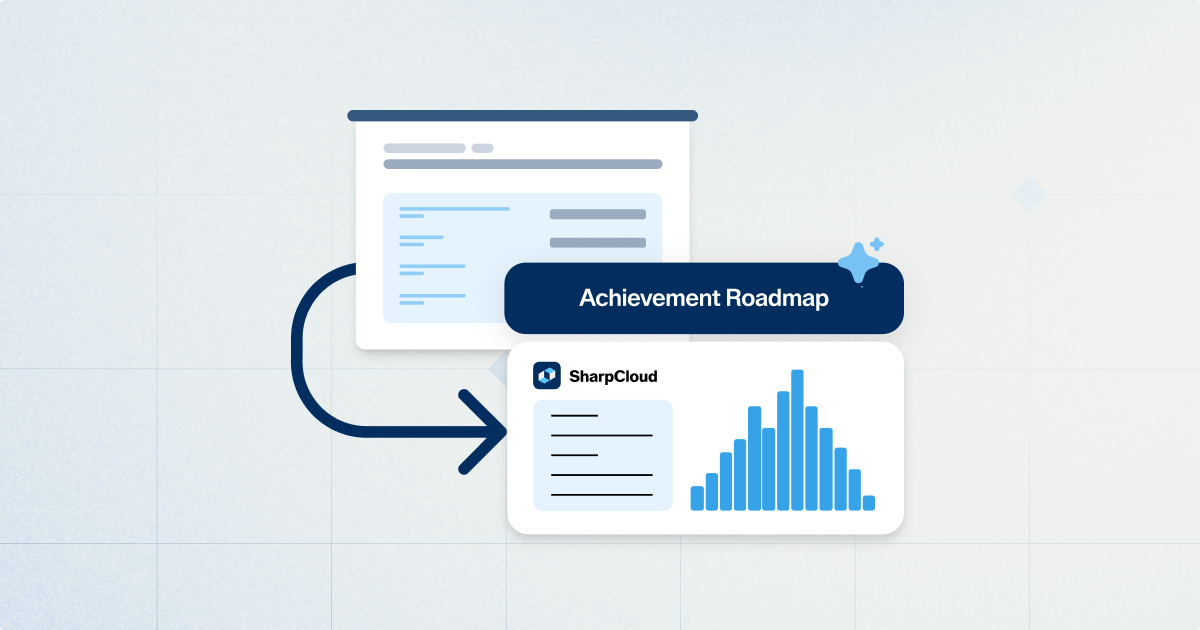
Those tools exist. SharpCloud, from Lumivero, integrates and presents all portfolio data in one place, so leaders can make better decisions in less time. It supports the ability to model multiple scenarios, analyze impacts of various courses of action, and monitor the implementation of decisions to ensure that the correct outcomes are being achieved.
Lumivero’s decision and risk management solutions can help organizations to bring real-time executive portfolio reporting to your organization—request a demo to learn more.
More expert insights from Andy Jordan
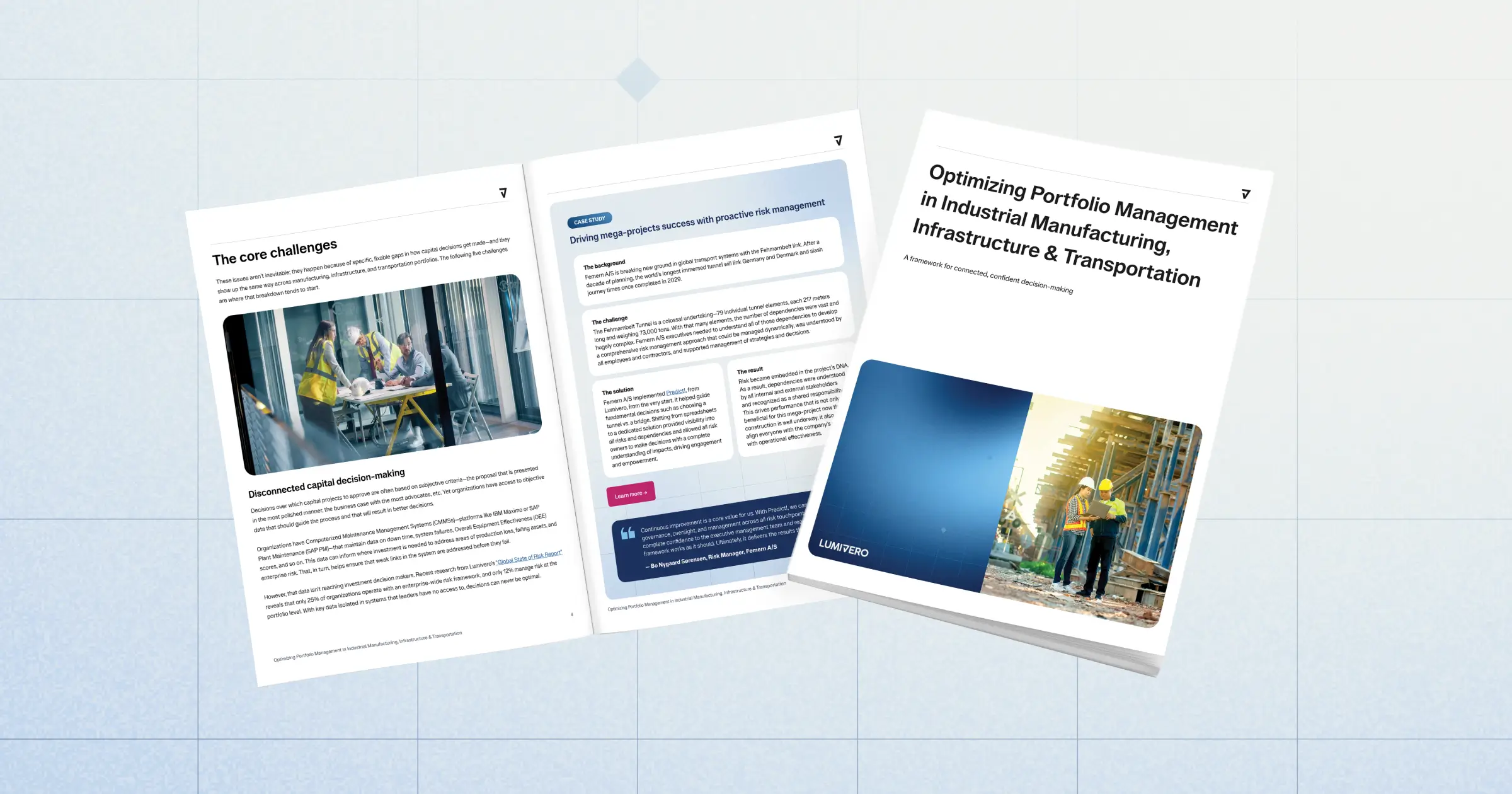
Gain a framework for connected, confident decision-making in “Optimizing Portfolio Management in Industrial Manufacturing, Infrastructure & Transportation.”
Download eBook →
Andy Jordan
President, Roffensian Consulting Inc.
Andy Jordan is President of Roffensian Consulting Inc., an Alberta, Canada based management consulting firm with a 20-year track record of success in strategic delivery, organizational transformation, portfolio management, PMOs and project management. Andy is an in-demand keynote speaker and author who delivers thought provoking content in an engaging and entertaining style, and is also an instructor in project management related disciplines including PMO and portfolio management courses on LinkedIn Learning.