With demand for nuclear power generation set to surge, risk analysts need better tools for estimating cost and schedule risks than traditional spreadsheet-based modeling. Learn how @RISK’s Monte Carlo simulation tools make probabilistic risk analysis possible and how Predict! provides a centralized, enterprise-wide risk management solution—even for the most complex power plant construction projects.
Nuclear power is once again gaining global momentum. After a period of slowed growth in the early 2000s, nuclear energy generation is on the rise again: the Energy Institute reports that 2024 set a record for nuclear power generated around the world. Nuclear power is poised to play a role in both decarbonizing the energy grid and in meeting demand for high-powered computing and AI data centers.
However, nuclear power plant construction projects are some of the most intensive infrastructure development initiatives in the energy sector due to their complex safety requirements, regulatory oversight, supply chain dependencies, and long construction timelines. Cost and schedule overruns in these projects can quickly spiral out of control, so effective risk management and forecasting strategies are key.
In a recent webinar, industry experts Glen Justis, CEO of Acclaim Strategies, and Mark Jenkins, Enterprise Sales Executive at Lumivero, explored how probabilistic risk analysis tools like @RISK and centralized risk management solutions like Predict! can support more defensible and resilient risk management strategies. Continue reading to gain the key takeaways from their insightful presentation or watch the webinar on-demand.
Explore proven strategies to control energy project risk, enterprise-wide in “The Essential Guide to Project Risk Control in Energy.”
Commercial nuclear energy generation began in the 1970s, and despite historical challenges—such as the partial meltdown of a reactor at the Three Mile Island plant in 1979—interest in nuclear power is growing again. According to data from the World Nuclear Association presented by Justis, nuclear power currently accounts for about 25% of all energy generated in the U.S. as of 2023. Goldman Sachs reports that investment in nuclear generation capacity grew at a CAGR of 14% from 2020 to 2024.

Historical chart showing nuclear power production by region, 1970–2024
Nuclear power offers a stable, controllable generation option. Unlike wind or solar, for example, nuclear generation based on advanced designs can be ramped up to meet increased demand. Still, even with a shift toward innovative, smaller modular reactors, cost and schedule risk in nuclear power plant construction remains a barrier to new investment due to historical plant development outcomes.
Consider the 12-year construction of Arizona’s Palo Verde plant, which ultimately cost more than twice its original estimate, or the recent expansion of Georgia’s Vogtle facility, which was disrupted by a major contractor bankruptcy mid-project.
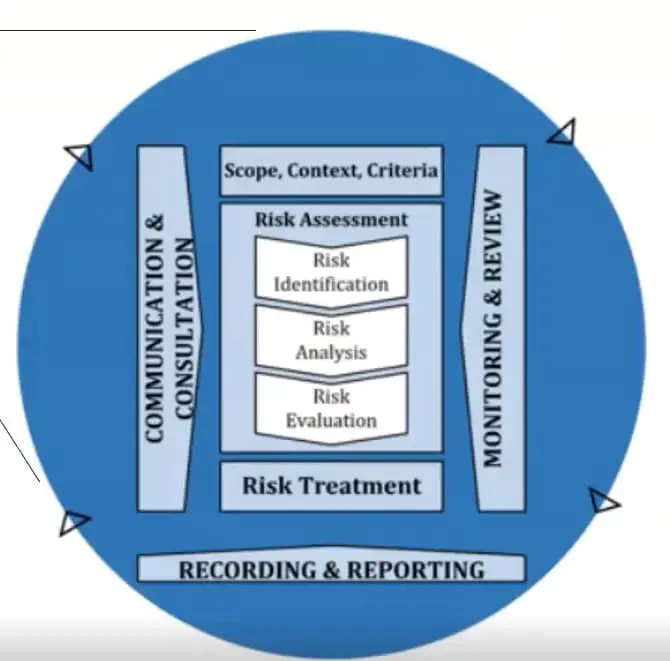
ISO 31000 framework risk management diagram
While improvements in construction, design, and engineering are contributing to better risk management across the sector, probabilistic risk analysis can support a more robust approach.
Nuclear megaprojects carry both continuous risks—such as variability in materials, labor costs, or weather-related delays—and event-based risks like supply chain disruption, regulatory changes, or supplier bankruptcy. Traditional spreadsheets and deterministic models often struggle to capture the full range of outcomes or the compounding effects of multiple risks.
@RISK’s Monte Carlo simulation helps address this challenge by modeling thousands of possible futures and illuminating the full distribution of potential cost and schedule outcomes. During the webinar, Justis demonstrated how models built using @RISK can show:
These insights help leaders quantify trade-offs, justify risk mitigation investments, and build stronger business cases—especially in environments where uncertainty is unavoidable.
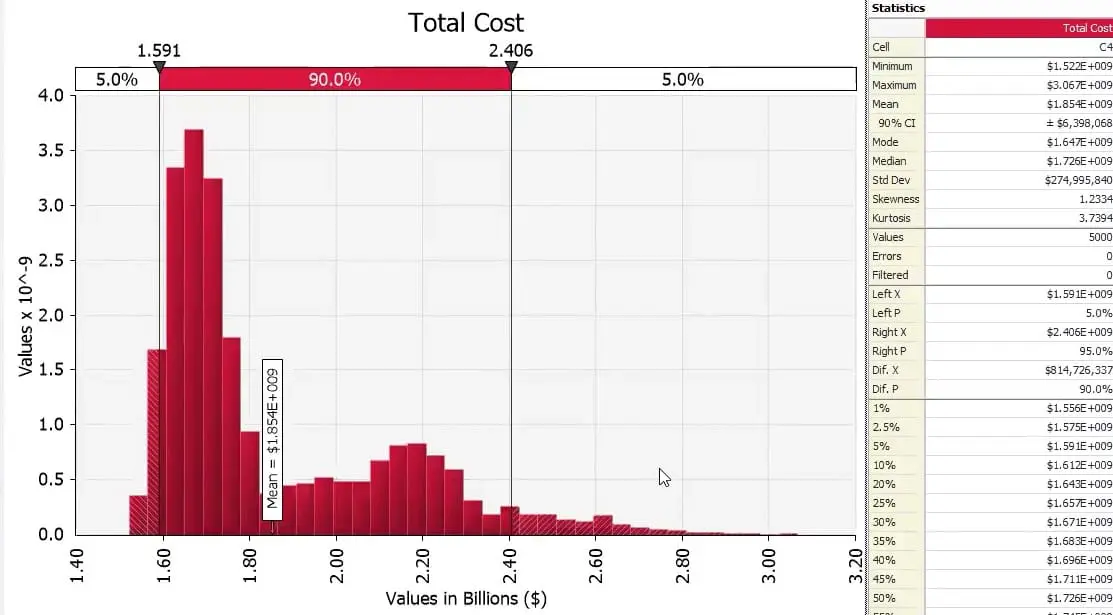
Monte Carlo simulation output showing a most likely total program cost of around $1.7 billion—but also a very long tail of probabilities with higher costs.
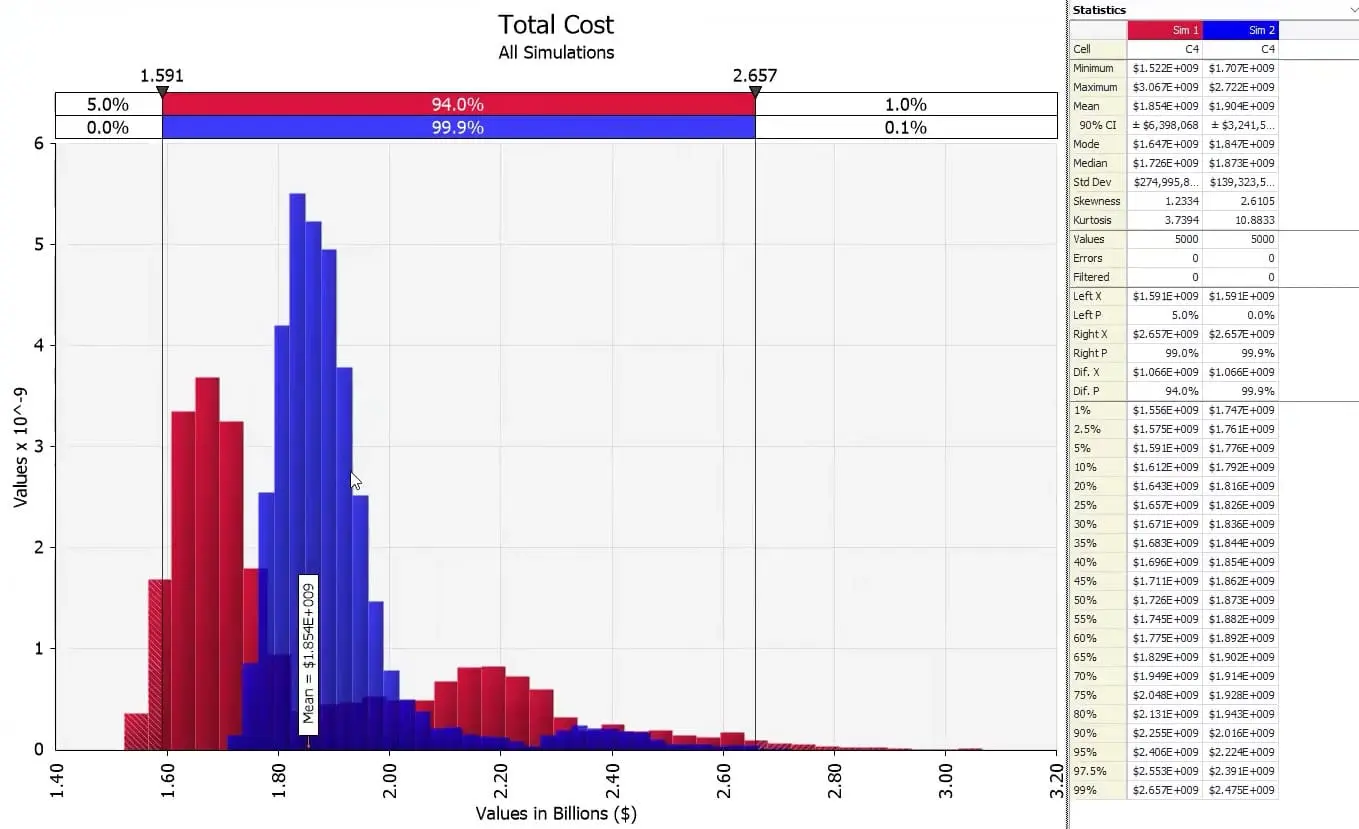
Monte Carlo simulation output showing a most likely total program cost of around $1.7 billion—but also a very long tail of probabilities with higher costs.
Sophisticated models only create value when their results are visible, accessible, and consistently governed. In many organizations, project teams still rely on disconnected spreadsheets and inconsistent reporting sources. As Jenkins highlighted, teams often spend up to 12 hours every quarter consolidating disparate data sources due to the lack of a centralized source of truth about their projects. This disjointedness leads to slower, less complete insights—and delayed decisions.

Example of Predict! risk folders, showing projects, risk owners, risk scores, and review due dates.
Predict! provides a centralized, structured repository for risk data—making it easier for teams to standardize inputs, track ownership, and maintain a clear line of sight across portfolios and complex programs.
With Predict!, teams can:
For megaprojects like nuclear facility construction, this centralized visibility helps unify project controls, engineering, finance, and risk teams around a shared, defensible understanding of risk.
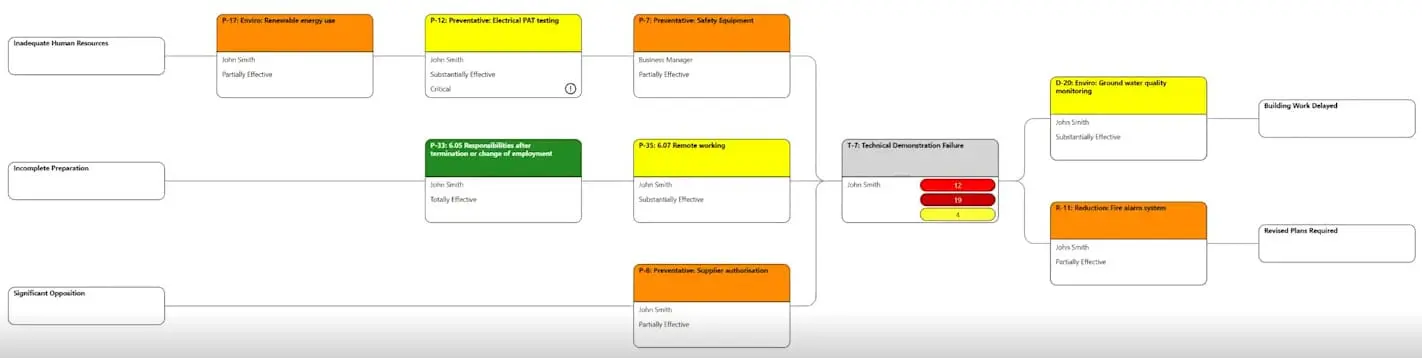
Sample bow-tie chart, with risk causes on the left, controls in the center, and consequences on the right
The energy sector faces increasing pressure to deliver major infrastructure safely, cost-effectively, and on schedule. By combining probabilistic risk modeling with centralized risk governance, organizations gain both the analytical power and organizational clarity needed to thrive in this environment.
@RISK helps forecast what could happen; Predict! helps align teams around what to do next. Together, they create a comprehensive, defensible approach to managing uncertainty in some of the world’s most complex projects.
See how @RISK and Predict! help your organization build clearer, more resilient, and more defensible risk models for nuclear and other high-stakes energy projects—and how SharpCloud connects those insights to decisions by making risk, dependencies, and tradeoffs visible across complex programs.
Request a demo today.