



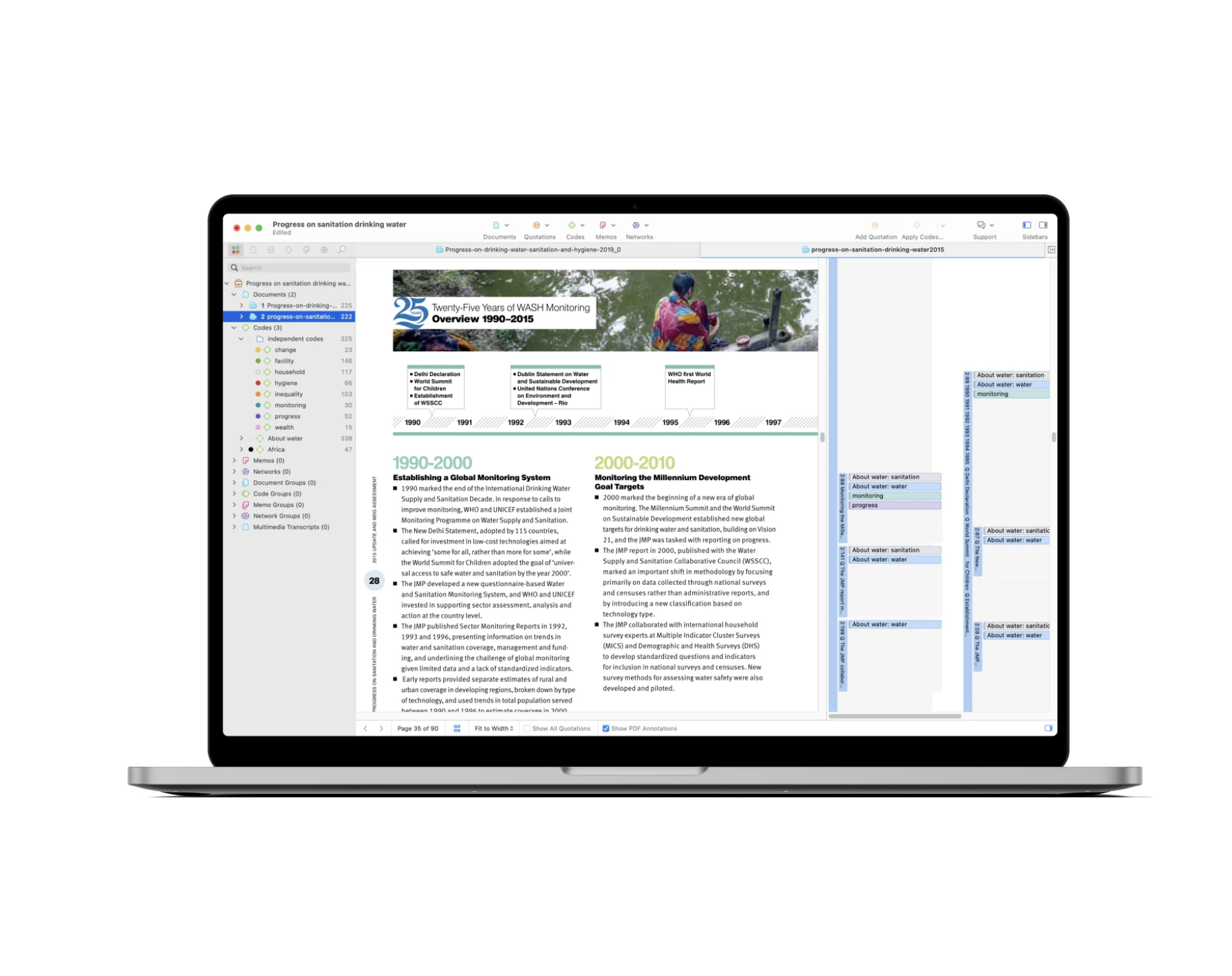
ATLAS.ti is a powerful qualitative data analysis (QDA) software that helps researchers uncover insights from texts (e.g., PDFs, articles), interviews, focus groups, field notes, surveys, and multimedia content. It provides intuitive tools for coding, organizing, visualizing, and interpreting qualitative data—helping researchers turn unstructured information into meaningful findings across academic, applied, and market research settings.
ATLAS.ti streamlines the qualitative research process, from importing and organizing data to transcribing interviews automatically, coding content, analyzing results, and reporting findings. It’s ideal for academic and professional research including thematic analysis, grounded theory, mixed methods studies, literature reviews, user research, and large-scale interviews or focus group analysis.
ATLAS.ti supports a wide range of qualitative and mixed methods data formats including:
ATLAS.ti also imports projects and data from other QDA platforms such as NVivo, MAXQDA, and popular transcription tools—making it easy to switch platforms or consolidate workflows.
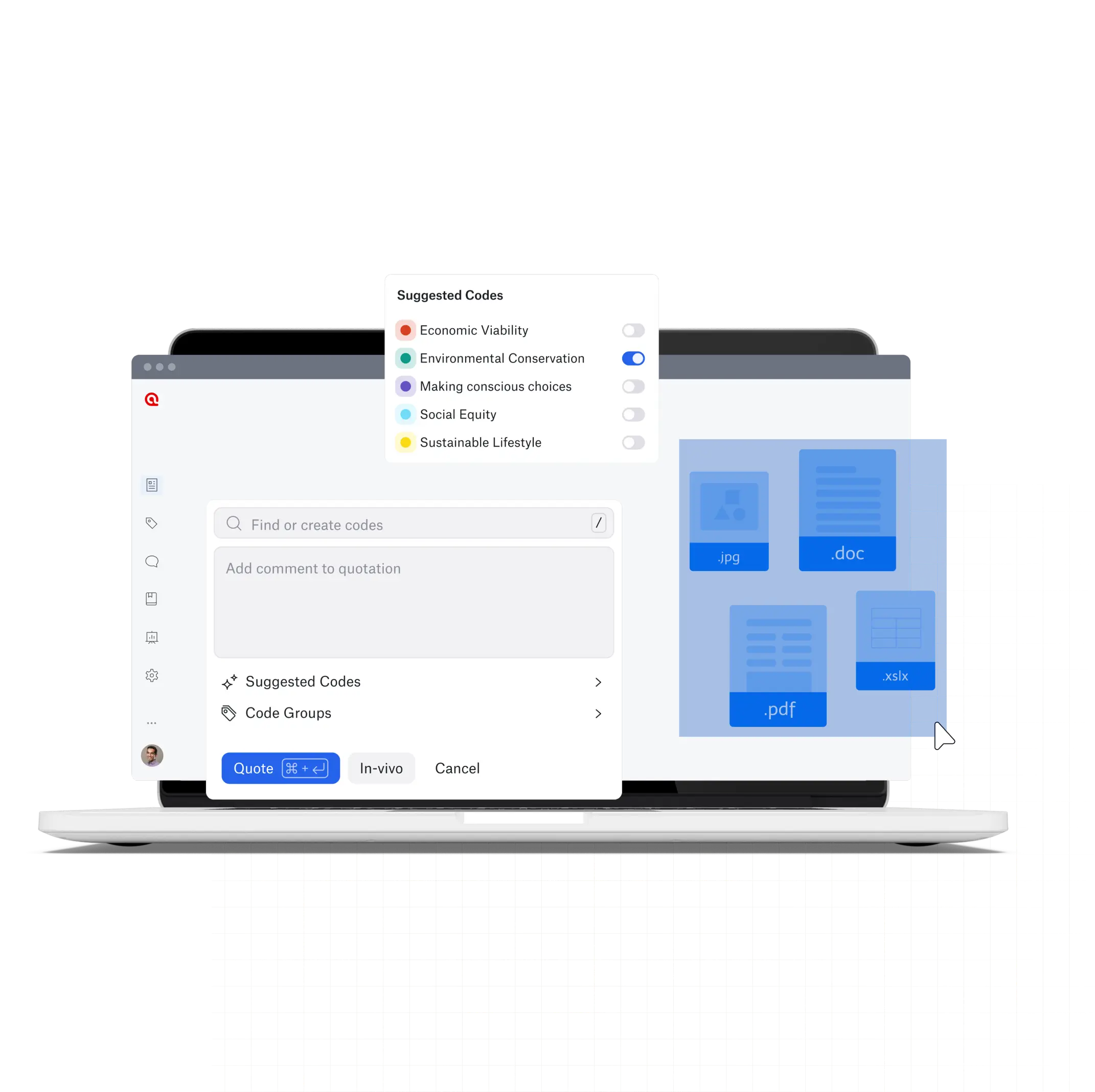
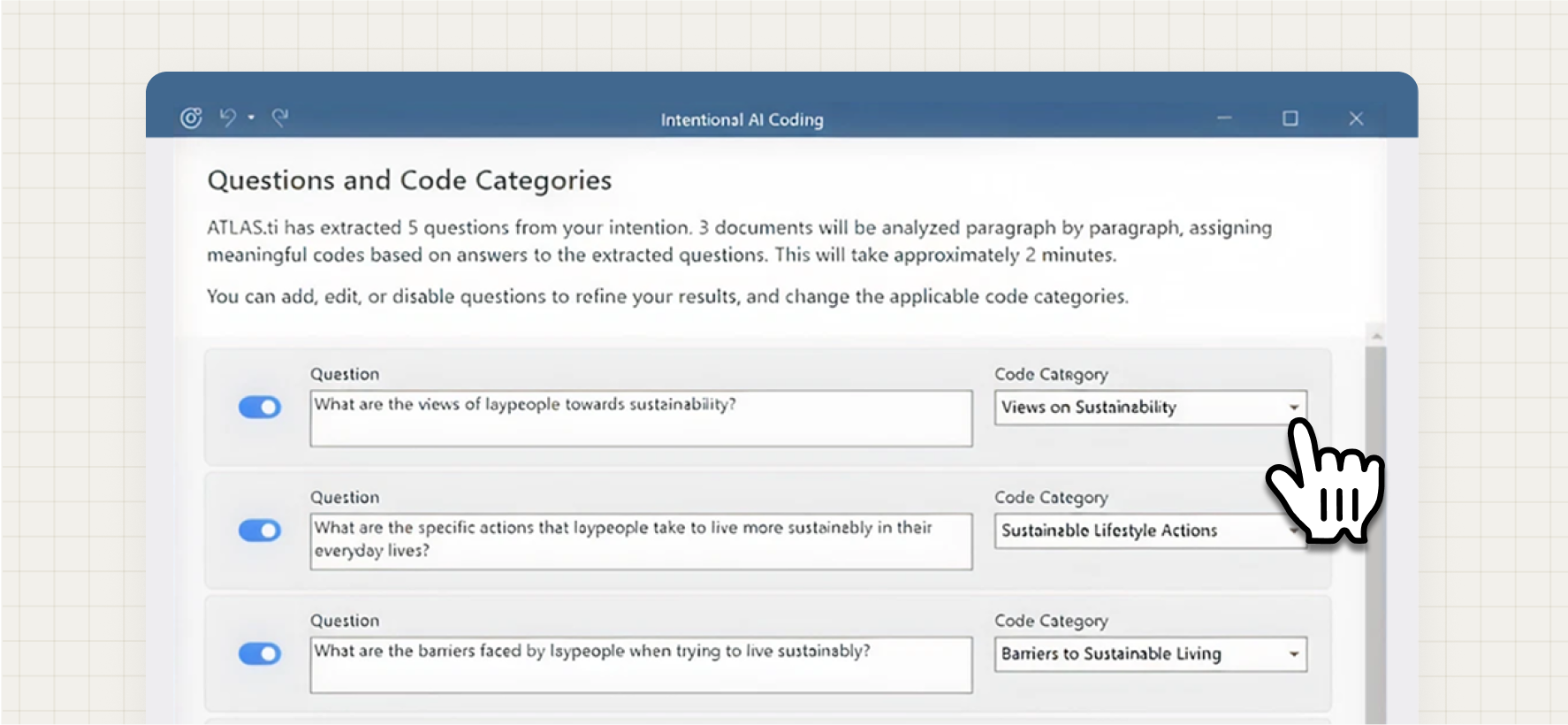
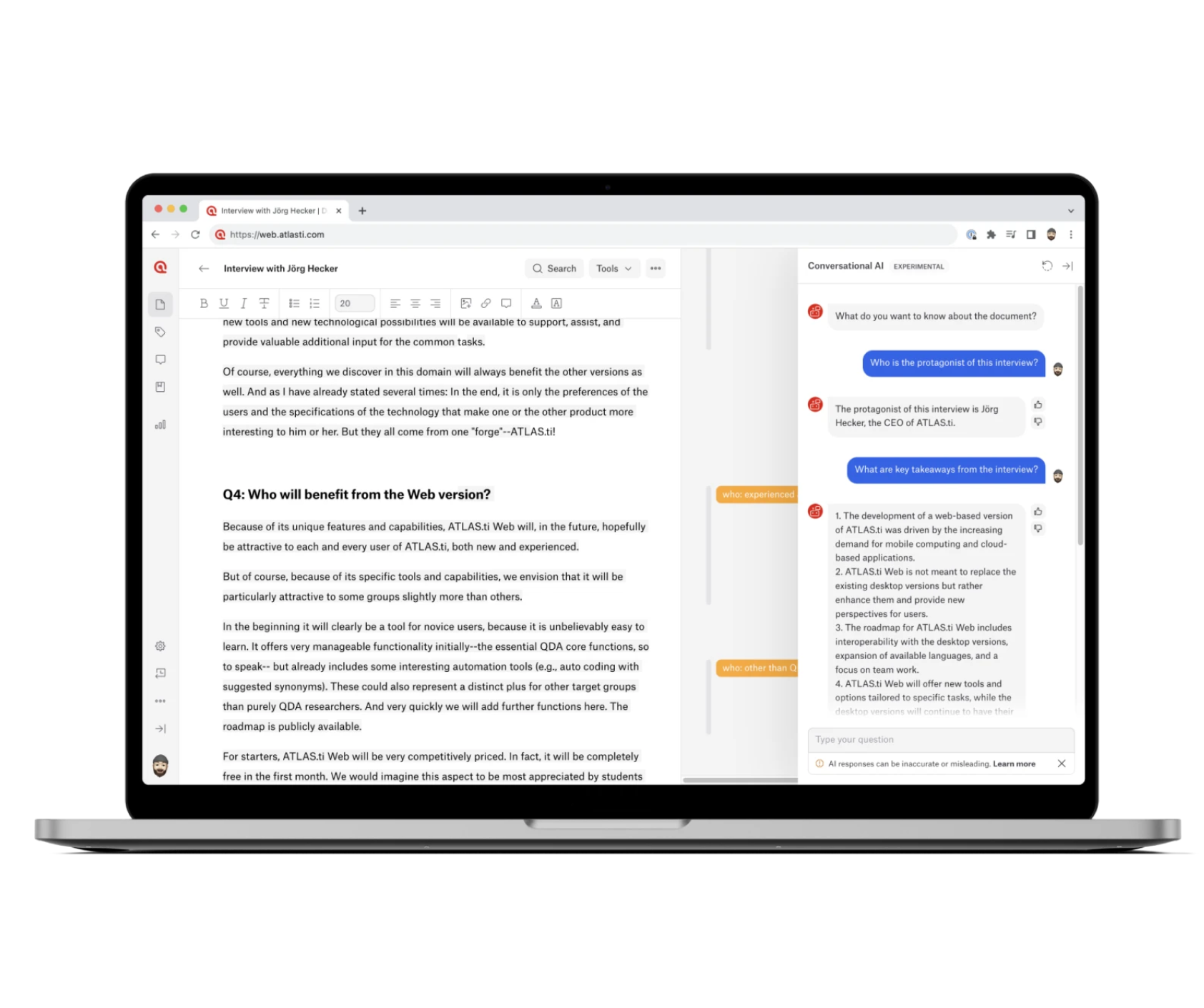
ATLAS.ti includes optional AI features designed to help accelerate analysis while keeping you in control. These include AI transcription for converting audio and video into text, AI-Suggested Codes that recommend relevant codes as you analyze, AI Summaries that generate concise overviews of documents, and Conversational AI, which lets you query your data in everyday language and explore multiple documents at once to quickly surface patterns and insights.
These tools help reduce manual effort and surface insights more efficiently without replacing your interpretive expertise.
ATLAS.ti includes a range of visualization tools that help you interpret and communicate your findings clearly. These include:
These visualizations make complex qualitative findings easier to explore, understand, and share.
ATLAS.ti makes it easy for teams to collaborate across locations and devices. Depending on the platform type you use (Windows/Mac/Web), collaboration options and features include:
With ATLAS.ti, teams can work together efficiently while maintaining data integrity and transparency.
Yes. ATLAS.ti works seamlessly with popular reference managers through XML or BibTeX exports. You can import references and linked PDFs from Citavi, Zotero, EndNote, and more, allowing you to bring your literature into ATLAS.ti for coding, annotation, and deeper analysis.
ATLAS.ti prioritizes data security and privacy.
For the Desktop version, project data is stored locally by default, giving you full control over where your information resides.
For cloud-based features, ATLAS.ti uses secure infrastructure and encrypted connections to protect data in transit. We comply with GDPR requirements, and ATLAS.ti does not access or use your project content. You can export or delete your data at any time. Whether you work individually or as part of a team, your research remains private and under your control.
ATLAS.ti is available on Windows, macOS, and a browser-based Web version, giving you the flexibility to work wherever you are and on your preferred device.
ATLAS.ti offers flexible licensing options for both individuals and organizations. Choices include annual and multi-year subscriptions, as well as student licenses available in both 6-month and 12-month terms, and multi-user or concurrent licenses for departments and larger institutions. Volume discounts are also available, making ATLAS.ti accessible and scalable for researchers, teams, and universities of all sizes.
Yes! ATLAS.ti offers a free trial so new users can explore all major features before purchasing. Download your free trial.
Yes! ATLAS.ti provides a wide range of learning resources, including step-by-step online guides, videos, and live training sessions, and optional one-on-one training with expert consultants. These resources make it easy for new users to get started and build confidence quickly.

