AI is reshaping project risk management by shifting it from a human-centered, episodic process to a continuous, intelligent system of decision-making. Instead of simply accelerating workflows, AI fundamentally reorganizes how project knowledge is captured, modeled, and shared across teams. This evolution empowers organizations to move from reactive reviews to proactive, real-time insight—elevating the strategic role of project risk management across the enterprise.
By Manuel Carmona , PMI-RMP, MBA, Risk and Decision Analysis Specialist, EdyTraining, Ltd.
For decades, project risk management has been anchored in a familiar set of activities and processes: identifying threats and opportunities, estimating their effect on cost and schedule, building models, and helping leadership navigate uncertainty with greater clarity. It has been a human-centered discipline, heavily dependent on technical knowledge, professional judgment, and long experience. Today, however, we are crossing a threshold. Artificial Intelligence is not simply altering the techniques we use—it is reshaping the very foundations on which project work is organized.
In my recent book, “Artificial Intelligence and Risk Analysis in Projects” (Ed. Taylor & Francis 2026), I argue that this transformation extends far beyond automation or productivity gains. AI is quietly becoming the new operating system for project decision-making. It changes how we capture knowledge, how we model uncertainty, and how organizations learn over time. The traditional view—“AI will accelerate your work” or “the person using AI will replace the person who does not”—captures only the surface of what is unfolding. Speed is the least interesting part of the story. AI is not just an accelerator of human effort; it is a force that reconfigures entire systems of work.
Sangeet Paul Choudary expresses this powerfully in his book, “Reshuffle,” where he describes AI as a structural disruptor and re-configurator rather than a productivity tool. Industries are being reorganized from the ground up. Established workflows designed around people start to dissolve, professional hierarchies flatten, and the logic of coordination changes. Expertise that once accumulated through slow apprenticeships becomes available on demand. Tacit knowledge that used to remain locked inside conversations, personal memory, or forgotten email threads becomes explicit and searchable. Teams learn faster because the organization itself begins to “remember.”
Consider the analogy from the legal profession excellently explained in Mr. Choudary’s book in which junior lawyers historically learned by manually reviewing contracts. It was through this repetitive, detailed work that they absorbed nuance, judgment, and the ability to anticipate legal risk. AI systems now scan thousands of documents in seconds, identify anomalies, recall how similar clauses were handled and settled in past negotiations, and propose alternative formulations. Expertise that once required years of deliberate practice can now be surfaced instantly. This change does not simply make lawyers faster; it reshapes the structure of law firms, the way they train new professionals, and the type of talent they require.
A similar shift is already emerging in project management. The discipline is built on tacit insight: the instinctive understanding of where a project may be vulnerable, the unspoken knowledge of how small delays ripple through a schedule, the accumulated lessons from past failures. Traditionally, this knowledge lived inside individuals or in scattered documents—from risk registers to contract amendments, to lessons learned to personal notes. AI changes this dynamic entirely. Systems can now absorb project histories, cost reports, schedule baselines, change logs, correspondence, and unstructured data, turning buried information into actionable intelligence.
Risks that once depended on someone’s recollection or intuition can be detected automatically. Patterns that escape the human eye—early signals of cost escalation, behavioral indicators of stakeholder misalignment, or subtle correlations between scope changes and schedule drift—can be surfaced consistently and early.
This does not diminish the importance of quantitative analysis or Monte Carlo simulation; on the contrary, it elevates them. Instead of spending hours building and maintaining models, teams will increasingly supervise them, interrogate their assumptions, and ask more ambitious questions. The risk analyst evolves from a builder of spreadsheets into an architect of decision systems. As models become easier to generate and iterate through conversational interfaces, the focus shifts from mechanical construction to analytical interpretation. The value no longer lies in the complexity of the tool but in the clarity of the insights it produces.
The consequences for project organizations are profound. Workflows change first: less time is spent on administration, reporting, or manually updating registers, and more time is devoted to analyzing signals, studying scenarios, and designing responses. Coordination evolves too. When information is continuously synthesized by AI, teams align more quickly around a shared understanding of threats and opportunities. This reduces the need for heavy governance structures, repeated meetings, and layers of review. Smaller, more agile teams become capable of producing the kind of analysis that once required a full department.
Project management, in other words, will not escape the “reshuffle” that is already transforming sectors built on knowledge and coordination. In many ways, project management is particularly exposed. Projects are complex, dynamic, and rich in unstructured information. They generate the very kind of data—narratives, documents, revisions, commitments, assumptions—that AI systems are exceptionally good at understanding. The emergence of intelligent assistants capable of reading specifications, analyzing schedules, monitoring deviations, and anticipating risks will redefine expectations around quality, speed, and transparency.
We are moving from a world where risk management is episodic—punctuated by workshops, reviews, and monthly reports—to one where it becomes continuous and adaptive. Risk registers will not be static lists created at the start of a project but living systems that evolve in real time. Decision-makers will rely on simulations not as one-off analyses, but as constantly updated representations of project reality. And organizations will begin to treat risk data as a strategic asset rather than a compliance requirement.
This transformation will not replace human judgment. It will amplify it. But it will also demand a shift in mindset: from gathering information to shaping it, from documenting uncertainty to understanding it, and from reacting to surprises to anticipating them with unprecedented clarity.
The future of project risk management is not a faster spreadsheet. It is an intelligent ecosystem—powered by humans who understand risk, supported by machines that never stop learning.
Want more risk insights from Manuel?
Watch the on-demand webinar, “Decoding Decisions: Transforming a Risk Register into a Powerful Decision Engine,” to see how modern teams turn risk data into clearer, faster decisions.
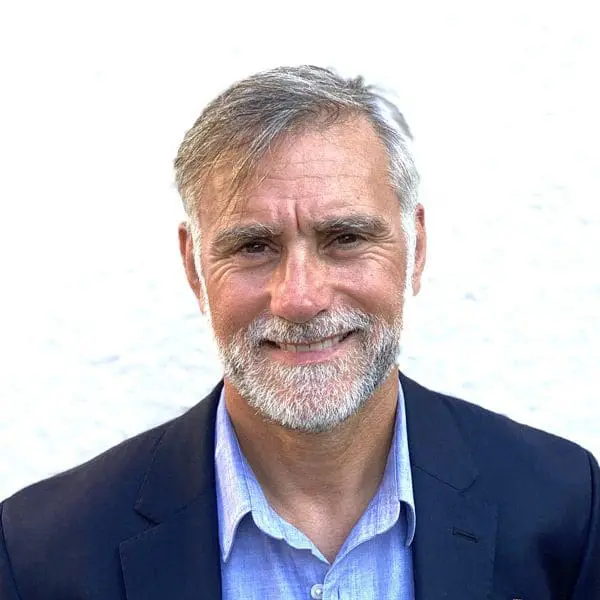
Manuel Carmona
Risk and Decision Analysis Specialist, EdyTraining, Ltd.
Manuel Carmona, MBA-RMP, is a specialist in risk and decision analysis with a focus on project risk management. He has extensive experience in managing risks in projects using ScheduleRiskAnalysis and is recognized for his contributions to leading risk management standards.