















Key takeaways
Large organizations don’t lack tools or data—they lack connection and visibility across complex portfolios. Traditional project portfolio management (PPM) tools focus on tracking projects but struggle to show how strategy, risk, dependencies, and delivery interact at scale. Modern PPM is shifting toward real-time, integrated, and visual decision-making, enabling leaders to understand trade-offs, anticipate risk, and align execution with strategy. The most effective PPM tools in 2026 connect data across systems to deliver clearer insight and faster, more confident decisions.
As organizations scale across multiple business units, geographies, and programs, the challenge is no longer execution—it is understanding. Hundreds of projects running in parallel create complexity that spreadsheets, slide decks, and disconnected systems cannot keep up with. Information becomes fragmented, outdated, and difficult to interpret in context.
As a result, decision-makers are often left asking a simple question: what is actually happening across our portfolio right now?
That’s why choosing the best project portfolio management software in 2026 matters.
Modern project portfolio management (PPM) tools go far beyond project tracking. They connect strategy to execution, unify data across systems, and provide real-time insight into performance, risk, and interdependencies. Most importantly, they enable leaders to make faster, more confident decisions in complex environments.
This guide explores the leading PPM tools for large organizations, the key capabilities that matter most, and how a new generation of visual, connected platforms is reshaping enterprise portfolio management.
Challenges facing large organizations managing complex portfolios
Before selecting tools, it’s essential to understand the problems they are expected to solve.
Large enterprises typically struggle with:
- Fragmented visibility: Portfolio data is spread across Jira, Excel, ERP systems, and BI tools
- Hidden dependencies: Projects appear independent but are deeply interconnected
- Resource conflicts: Competing demands for shared teams and skills
- Strategic misalignment: Delivery work drifts away from business objectives
- Slow decision cycles: Leadership lacks real-time portfolio insight
- Late risk identification: Issues surface only after impact has occurred
Traditional PPM tools were designed to manage delivery at a project level, not to manage complexity across an entire enterprise. As a result, organizations often end up managing activity rather than outcomes.
Why traditional project portfolio management tools fall short
Most legacy project portfolio management tools were built for a simpler operating environment. They focus on tracking individual projects rather than understanding how those projects interact as part of a wider system.
This creates several limitations:
- Siloed execution – visibility remains at project level, not portfolio level
- Disconnected data – information is spread across systems with no unified view
- Manual reporting cycles – increasing risk of outdated information
- Limited integration – weak connection with modern systems like Jira or Power BI
- Static reporting outputs – dashboards that quickly become stale
- Poor dependency visibility – limited understanding of cross-program impacts
The result is organizational activity without true alignment. Teams remain busy, but leaders lack confidence that effort is translating into strategic progress.
Key capabilities of modern PPM tools
To manage enterprise risk and complexity effectively, modern PPM platforms must go beyond scheduling and reporting. The most effective tools now combine data, visualization, and decision intelligence.
1. Portfolio-wide visibility
A unified view of all programs, projects, and strategic initiatives.
Why this matters: Leaders can quickly understand what’s happening across the business.
When you need it: Managing multiple portfolios across departments or regions.
2. Real-time data integration
Live connections to tools like Jira, Power BI, Snowflake, and Microsoft Project.
Why this matters: Eliminates manual updates and ensures decisions are based on live data.
When you need it: When data is distributed across multiple systems.
3. Dependency mapping
Visual representation of how projects, resources, and outcomes are connected across the portfolio.
Why this matters: Reveals sequencing issues and cross-project impact
When you need it: In multi-program environments with shared dependencies.
4. Risk visibility
Real-time understanding of risk exposure across the portfolio.
Why this matters: Enables proactive mitigation instead of reactive firefighting.
When you need it: In regulated, high-value, or high-risk environments.
5. Scenario modelling
“What if” analysis across different investment or delivery options.
Why this matters: Reduces uncertainty and improves confidence in strategic decisions.
When you need it: When prioritizing investments or reallocating resources.
6. Strategic alignment tracking
Clear links between delivery work and organizational objectives.
Why this matters: Ensures work contributes to measurable outcomes.
When you need it: When managing transformation or long-term initiatives.
7. Visual communication
Interactive dashboards and portfolio maps
Why this matters: Improves stakeholder understanding across technical and non-technical audiences.
When you need it: When presenting to executives or cross-functional teams.
8. Collaboration at scale
Shared real-time environments for multiple stakeholders.
Why this matters: Breaks down silos and improves alignment.
When you need it: In large, distributed organizations.
9. Resource visibility
Insight into capacity, allocation, and bottlenecks.
Why this matters: Prevents overloading teams and improves efficiency.
When you need it: When resources are shared across multiple projects.
10. Governance and auditability
Full traceability of decisions, data sources, and changes, and data sources
Why this matters: Supports compliance and accountability.
When you need it: In regulated industries like aerospace and defense, manufacturing, construction, finance, or healthcare.
Leading project portfolio management tools
SharpCloud - Best for complex enterprise portfolio decision-making
What & why
SharpCloud is a project portfolio management platform designed for large organizations operating complex, interconnected portfolios. It connects portfolio, project, and risk data from across multiple business systems into a single, interactive decision environment—providing leaders with a real-time, connected view of what matters.
This enables organizations to align strategy with execution, improve visibility across the portfolio, and make faster, more confident decisions based on shared, up-to-date information.
Where SharpCloud excels
SharpCloud extends beyond traditional portfolio tools by treating the enterprise portfolio as a connected system rather than a collection of standalone initiatives. This allows relationships between projects, dependencies, and risks to be understood in context, rather than in isolation.
Instead of replacing existing tools, SharpCloud integrates with systems such as Jira, Power BI, Snowflake, and Microsoft Project. This enables organizations to bring together data from across the business without disrupting established workflows, reducing duplication, and improving consistency across teams.
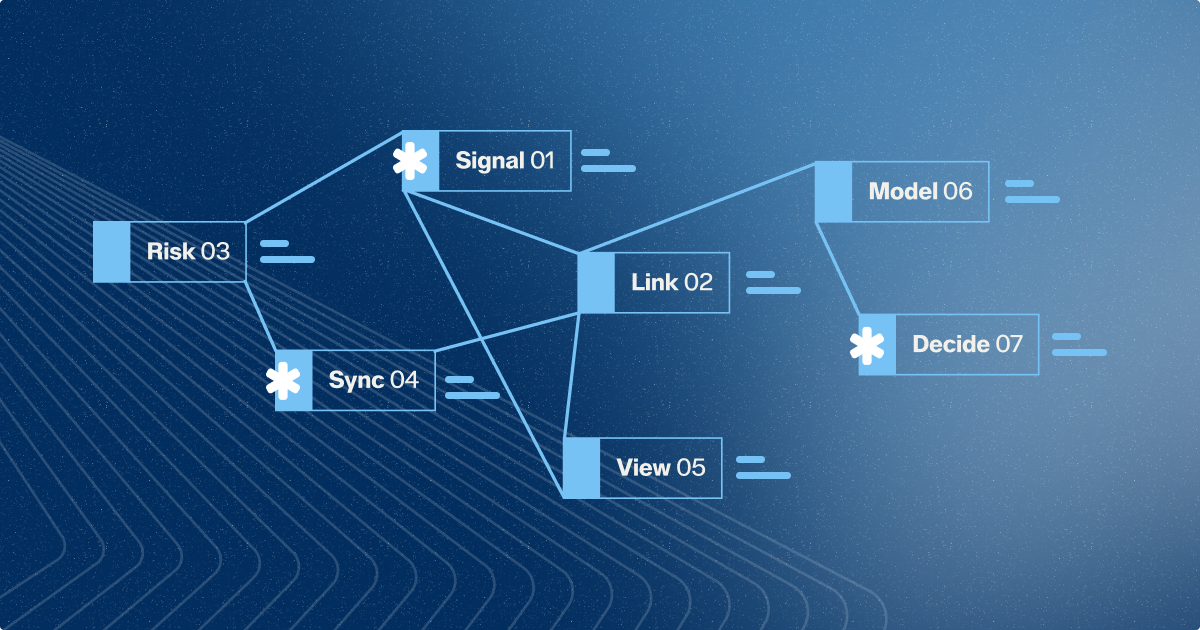
This connected data is then transformed into interactive visual portfolio maps that make complexity easier to navigate. These views bring together dependencies, risks, timelines, and strategic objectives in a single environment, helping decision-makers understand how different parts of the portfolio influence one another.
SharpCloud portfolio project management software enables organizations to:
- Visualize dependencies across complex programs
- Identify risks before they escalate or cascade across initiatives
- Align teams and investments with strategic objectives
- Make faster, more confident decisions with real-time insight
SharpCloud is particularly well suited to sectors such as aerospace and defense, energy, manufacturing, and government, where large-scale portfolios, interdependencies, and risk exposure require a higher level of visibility and control.
The Full Decision Cycle with SharpCloud + Predict! + @RISK
SharpCloud is part of Lumivero’s decision intelligence suite—alongside Predict! and @RISK—creating a complete, end-to-end decision-making ecosystem for managing complex portfolios of projects.
Predict! enhances planning with advanced forecasting, enabling organizations to model complex programs, resource constraints, and delivery timelines with greater accuracy. It moves planning beyond static schedules to a more predictive, forward-looking approach.
@RISK adds quantitative risk analysis through Monte Carlo simulation, replacing subjective scoring with probabilistic forecasts that show the full range of possible outcomes and their likelihood.
SharpCloud connects these insights at the portfolio level—bringing together planning, risk, and performance data into a visual, interactive environment that makes complex relationships easier to understand and act on.
Together, Lumivero’s decision software enables organizations to:
- Plan and model complex programs with confidence
- Quantify uncertainty using data-driven risk analysis
- Understand portfolio-wide impacts and dependencies
- Make faster investment decisions with full context
This integrated approach supports the full decision cycle—from forecasting and planning to risk analysis and strategic execution—providing a level of insight that standalone PPM tools cannot match.
Download the eBook: The Guide to Intelligent Decision-Making Across Project Portfolios
See how connected data gives leaders the visibility needed to prioritize the right initiatives and avoid stalled momentum.
SharpCloud: Strengths and considerations
Strengths:
- Visual clarity for complex portfolios for all stakeholders
- Strong integration with enterprise systems
- Connected decision-making across risk, planning, and strategy
Considerations:
- Requires structured data integration approach
- Teams need time to transition from static, spreadsheet-based thinking
- Maximum value achieved when using full SharpCloud + Predict! + @RISK ecosystem
Other top project portfolio management tools (2026)
Microsoft Project / Planner
Strong for organizations already using Microsoft 365, offering solid scheduling, resource management, and governance. However, it can feel rigid and requires significant configuration for full portfolio-level visibility.
Planview
A mature enterprise PPM platform focused on strategy-to-execution alignment, resource management, and scenario planning. Very powerful, but complicated to implement with a steep learning curve and longer deployment timelines in large organizations.
Planisware
Highly configurable enterprise solution widely used in regulated industries such as pharma and aerospace. Strong in financial control and portfolio governance but requires specialist expertise to maintain.
ServiceNow SPM (Strategic Portfolio Management)
Best suited to organizations already within the ServiceNow ecosystem, linking demand, IT workflows, and portfolio governance within a single platform. Less intuitive outside IT-heavy environments and can become costly and complex to scale.
Aha! Roadmaps
Best for structured product roadmapping and feature planning. It is widely used among product and strategy teams and offers capabilities for organizing and tracking initiatives across product portfolios.
Productboard
Productboard is a product management platform designed to help teams understand what users need, prioritize what to build next, and rally everyone around their roadmap.
Smartsheet
Popular for its spreadsheet-style interface and rapid adoption across business teams, making it well suited to lightweight portfolio visibility and reporting. Limited when it comes to complex dependency mapping and the demands of large-scale enterprise portfolio management.
Monday.com
Highly visual and easy to adopt, making it strong for collaboration and day-to-day operational work management. Less suitable for full enterprise PPM requiring advanced financial planning or risk modelling.
Jira Align (Atlassian)
Designed to scale Agile across enterprise portfolios, with strong capabilities for connecting strategy, epics, and delivery teams in software-driven environments. Less suited to broader capital portfolio management or infrastructure-heavy environments outside of Agile software delivery.
Wrike
Strong all-arounder for project and portfolio visibility with good dashboards, automation, and reporting. Can become complex in large deployments, and advanced features often require careful configuration.
Clarity PPM
An enterprise-grade portfolio management platform focused on governance, financial control, and resource management across complex organizations. Highly configurable and powerful at scale but requires significant setup effort and training to unlock its full value.
| Tool | Best for | Key strength | Key limitation |
|---|---|---|---|
| SharpCloud | Complex enterprise portfolio decision-making | Connects portfolio, project, and risk data into a visual, interactive decision environment—providing a real-time, enterprise-wide view. Strong dependency mapping, scenario modelling, and executive-ready visualization. Extended by Lumivero’s decision software: Predict! enables forecasting and risk capture, while @RISK adds Monte Carlo simulation to quantify uncertainty—supporting the full portfolio decision cycle. | Best suited to complex, multi-system enterprise environments; requires a shift from static reporting to connected, visual portfolio management to unlock value |
| Microsoft Project / Planner | Microsoft 365 organizations | Strong scheduling and governance within Microsoft ecosystem | Limited portfolio-level intelligence without heavy configuration |
| Planview | Enterprise PPM & strategy execution | Deep portfolio planning, resource management, and scenario modelling | Complex implementation and steep learning curve |
| Planisware | Regulated industries (pharma, aerospace) | Strong financial control and highly configurable portfolio management | Requires specialist expertise to configure and maintain |
| ServiceNow SPM | IT-led enterprises | Strong integration of demand, IT workflows, and portfolio governance | Best suited to IT environments; can be costly at scale |
| Aha! Roadmaps | Product and strategy teams | Structured roadmapping with initiative tracking across product portfolios | Primarily focused on product management; less suited to broader project or portfolio use cases |
| Productboard | Product teams | Capturing user feedback and linking it to roadmap prioritization | Limited portfolio management depth beyond product planning |
| Smartsheet | Lightweight portfolio tracking | Easy adoption with flexible spreadsheet-style interface | Limited dependency mapping and enterprise portfolio depth |
| Monday.com | Work management & collaboration | Highly visual and easy to use for teams | Not designed for full enterprise PPM or deep risk modelling |
| Jira Align | Agile enterprise scaling | Strong alignment between strategy, epics, and delivery | Less suitable outside Agile/software environments |
| Wrike | Mid-to-large portfolio visibility | Strong dashboards, reporting, and automation | Can become complex in large enterprise deployments |
| Clarity PPM | Financially governed portfolios | Strong budgeting, forecasting, and resource management | Heavy configuration and implementation effort |
Key takeaway:
Most tools fall into three categories:
- Execution-focused tools (Monday.com, Smartsheet, Wrike)
- Agile enterprise scaling tools (Jira Align, ServiceNow SPM)
- Enterprise portfolio governance platforms (Planview, Planisware, Clarity)
However, a growing gap exists between tracking work and connecting strategy, risk, and decision-making across the portfolio—where decision intelligence platforms like SharpCloud increasingly stand out.
How modern PPM tools support strategic decision-making
The biggest shift is this: PPM is no longer about tracking—it’s about decision-making.
Modern platforms enable organizations to:
- Connect strategy to execution in real time
- Understand trade-offs between initiatives
- Prioritize based on value and risk
- Adapt quickly to changing conditions
Instead of asking “Are we on track?”, leaders can ask:
- “Are we working on the right things?”
- “What happens if this changes?”
- “Where should we invest next?”
How PPM tools enable real-time visibility across the enterprise
The foundation of modern PPM is integration + visualization.
By connecting data from multiple systems and presenting it visually, organizations can:
- Eliminate silos across teams and business units
- Surface hidden insights that would otherwise remain invisible
- Create a shared understanding of the portfolio
This results in a live, connected view of the enterprise that supports better decision-making at every level.
What differentiates modern PPM platforms from traditional tools?
Three key differences stand out:
- Connected data - advanced platforms integrate across systems instead of operating in silos.
- Visual intelligence - they turn complex portfolio data into clear, actionable insights.
- Decision support - enable organizations to evaluate options and choose the right actions—not just track progress.
What to look for when choosing a PPM platform
Selecting a PPM platform is a strategic decision, not just a technology procurement exercise. The right tool depends on where your organization sits today—and where it needs to go.
Start by asking:
- What level of complexity are we managing? If your portfolio spans multiple programs, geographies, or business units with shared dependencies, you need more than a project tracker. You need a system that reflects how your portfolio actually operates as an interconnected whole.
- Where does our data live? Modern PPM tools should integrate with the systems your teams already use—Jira, Microsoft Project, Power BI, ERP platforms—rather than creating yet another silo. Prioritize platforms with proven, native integration capability.
- Who needs to use it? Effective PPM serves both the analysts building the models and the executives making the calls. Look for tools that can present the same underlying data in different views—without requiring manual reformatting for each audience.
- How mature is our approach to risk? Many organizations track project status but struggle to quantify or communicate risk at the portfolio level. If risk visibility is a gap, consider whether your PPM platform can integrate with dedicated risk analysis tools—or whether you need a broader decision intelligence ecosystem.
- Are we ready to move beyond static reporting? The shift from spreadsheets and slide decks to live, connected portfolio views requires a change in mindset as much as a change in tooling. Factor in the time and change management support needed to make that transition successful.
For large organizations managing high-stakes, complex portfolios, the platforms that deliver the most long-term value are those that can connect data, surface risk, and support real decisions—not just generate reports. That's the standard worth applying to any shortlist.
Why SharpCloud stands out in 2026
While many tools address parts of the challenge, SharpCloud connects the full picture.
It provides:
- Data integration across enterprise systems
- Visualization of complex portfolios and dependencies
- Real-time risk and insight generation
- Scenario modelling for “what if” analysis
- Strategic alignment from portfolio to execution
When combined with Predict! and @RISK, it becomes a complete decision intelligence ecosystem.
For large organizations, this delivers:
- Real-time visibility across portfolios
- Earlier identification of risk and dependencies
- Stronger alignment between strategy and execution
- More confident, data-driven investment decisions
This level of integrated decision support is where advanced PPM platforms fundamentally diverge from traditional tools.
Ready to see your portfolio more clearly?
Book a demo with SharpCloud to see how a connected, visual approach to portfolio management can help your organization turn complexity into clarity and improve decision-making across the enterprise.