







Key takeaways
The placement decision—not the placement itself—is where outcome quality is determined, and most programs aren’t fully in control of it. High-performing programs treat district relationships as an active partnership across three moments: they share information before the referral so they’re confirming a match, not starting a search; they stay visible during the district decision so they can act on issues early; and they close the loop after placement so each term’s decisions are shaped by what actually worked.
It’s not about resources. It’s about when—and how—they engage with district partners.
The moment that determines the quality of a teacher placement isn’t in the classroom. It happens weeks earlier—in the conversation between a placement coordinator and a district contact, before a single referral has been made.
Most programs invest significant energy in what happens during a placement: monitoring site quality, gathering midpoint feedback, intervening when a student-supervisor relationship isn't working. Far less investment goes into the moment that sets all of that up—the placement decision itself, and whether the program is even part of how that decision gets made.
Consider two teacher education programs in the same regional market with similar student populations. One consistently places students in well-matched classrooms with experienced supervising teachers. The other spends most of the spring term managing surprises: sites that didn't have capacity, supervisors who weren't expecting a student, mismatches that take weeks to unravel.
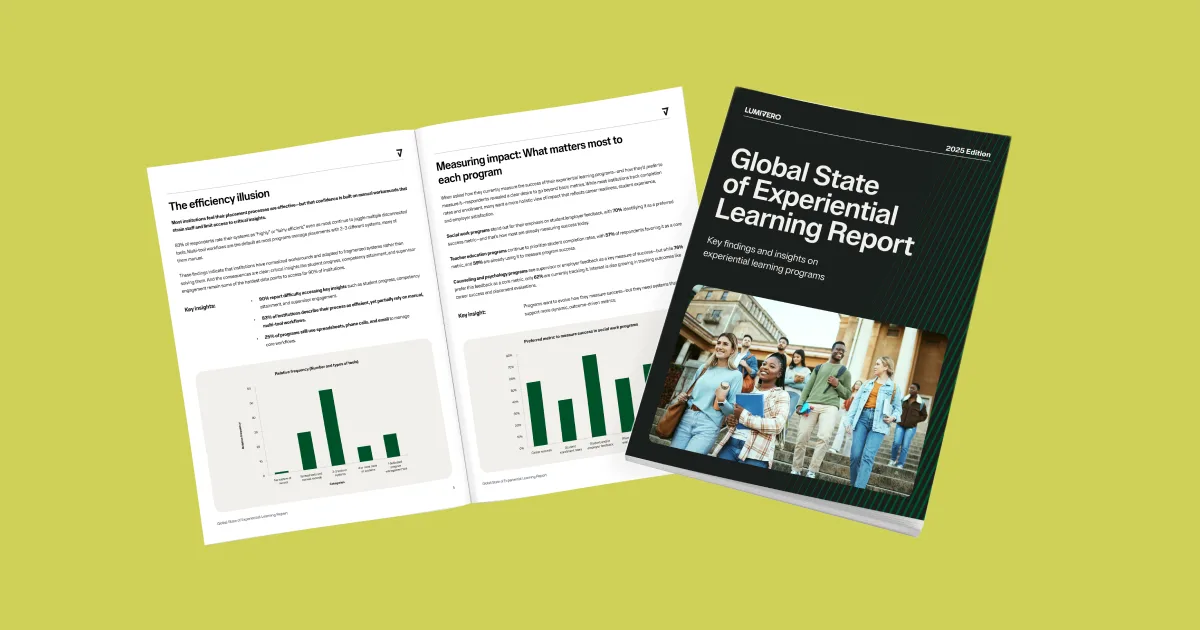
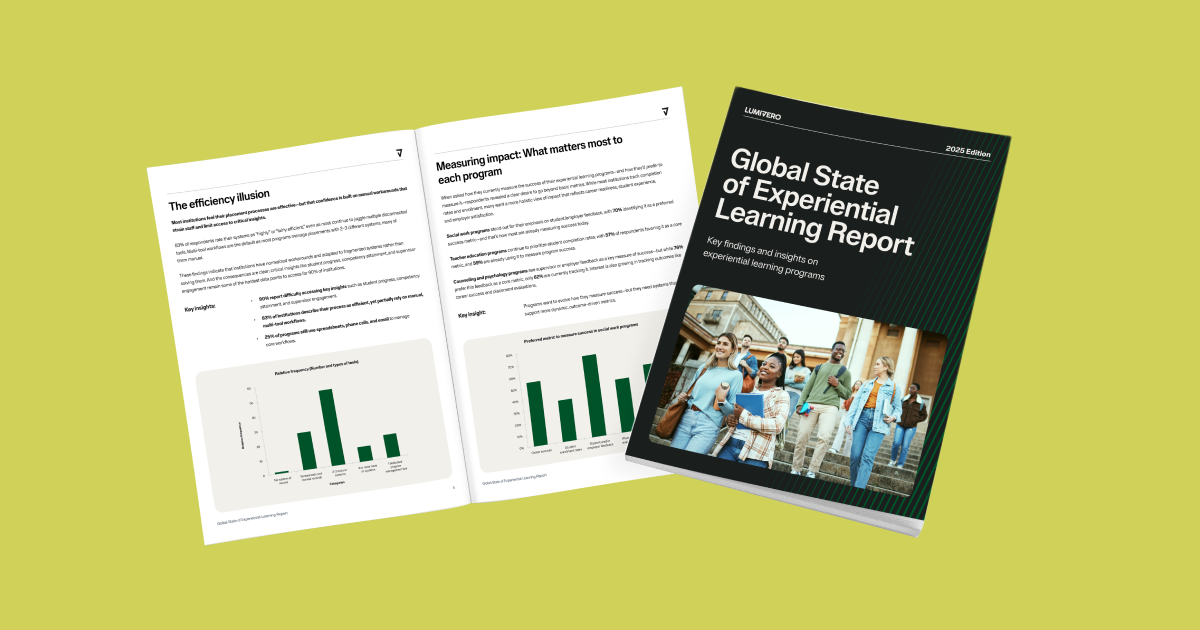
It's a pattern that shows up in the data too. According to Lumivero's “2025 Global State of Experiential Learning Report,” 40% of programs that build reports manually cite supervisor engagement as one of the most time-intensive to produce—hours spent chasing information that a well-coordinated placement should have surfaced from the start.
The difference isn't resources. It's whether the program is part of the district's placement conversation from the start—or receiving the outcome of a decision they had no hand in.
Here's what looks different when programs get it right.
1. Coordinating with districts before the referral goes out
The standard referral workflow goes like this: compile a student list, match to known sites, send it to a district coordinator, and wait. The coordinator receives a spreadsheet, works through it on their own timeline, and eventually sends something back. The placement team’s role in the decision is essentially limited to making the ask.
High-performing programs don't wait for referral season to start coordinating. By the time they send a student list, the groundwork—site relationships, supervisor availability, capacity checks—is already done.
The most effective placement teams maintain a continuous relationship with district contacts throughout the academic year—not just at referral time. They know which supervisors have bandwidth, which sites are actively accepting students, and which relationships have produced strong outcomes in previous terms.
When referral season arrives, they’re confirming a match. Not starting a search.
This matters because the quality of a placement is almost entirely determined before the student walks in the door. Research from the National Council on Teacher Quality found that when student teachers are placed with strong cooperating teachers—rather than any willing volunteer—they are likely to perform as well in their first year as a typical third-year teacher.
The inverse is equally stark: placements with the weakest cooperating teachers measurably drag down first-year outcomes. Supervisor quality, site fit, the readiness of the classroom—all of these are fixed at the moment of allocation. Sending a referral list to a contact you haven’t spoken with since last May is not a partnership. It’s a handoff. And handoffs don’t put you in control of that moment.
What this looks like in high-performing field education programs:
- Continuous district contact throughout the year, not just at referral season
- A working knowledge of supervisor availability and site capacity before the student list goes out
- Referrals that confirm a match—rather than initiate a search
2. Staying visible during the district decision
Once a referral leaves a placement team’s desk, most programs lose visibility. They don’t know if the district coordinator has reviewed it, whether a supervising teacher has been approached, or whether there’s a capacity problem that will surface in two weeks as a last-minute scramble.
It’s a pattern our research captures well: 83% of institutions describe their placement processes as efficient, yet 90% report difficulty accessing key insights like student progress, supervisor engagement, and placement outcomes, according to Lumivero’s 2025 report. Confidence in the process and visibility into it are two different things.
High-performing programs don’t accept that invisibility.
They maintain a shared view of the referral process with district partners—both sides can see where each student is in the allocation workflow. When a district needs additional information before approving a referral, they can ask for it directly, without a round of emails. When a placement team needs to follow up on a pending decision, they can check the status without picking up the phone.
That stress is a symptom of invisible coordination—the weeks-long silence between a referral sent and an answer received, while students are waiting and schedules are filling up.
Programs that manage this well don’t just have better individual placements. They become easier to work with—and districts remember that.
In high-performing programs, that visibility works like this:
- Shared referral status that both the placement team and district can see in real time
- Direct communication that replaces back-and-forth email chains
- Early visibility into capacity issues — before they become last-minute placement failures
3. Closing the loop after placement
This is where most programs leave value on the table. The placement workflow ends at “placed.” The student is in a classroom, the coordinator updates a spreadsheet, and the term begins. What happened next—whether the placement worked, whether the supervisor was a strong match, whether the site will be worth referring again—is rarely captured in a way that informs what comes later.
High-performing programs treat the end of a placement as the beginning of the next one.
They track not just that a student was placed, but whether the placement worked—what the supervising teacher reported, whether the match was a good fit, and what that tells them about future placements at that site. Over time, this creates a feedback loop that makes each term’s decisions a little better than the last. It’s the difference between a placement record and a placement history, and that history becomes a reliable foundation that the whole team can build on.
Teacher education programs already know completion rates matter—57% identify them as a core success metric, according to Lumivero’s 2025 report. But most programs still struggle to connect placement quality data back to those outcomes, which means one of their most important levers for improving completion stays unused.
The data is there. The link between who a student is placed with and how they perform isn’t being drawn.
More immediately, closing the loop makes district conversations richer. When a placement coordinator calls a district partner in the fall, they’re not starting from scratch. They’re building on a shared history that the district can see. That kind of continuity is what turns a logistics relationship into a genuine partnership—one that holds up under the pressure of a difficult term.
And with 72% of teacher education programs expecting significant or moderate growth in the next two to three years, according to Lumivero’s 2025 report, that continuity isn’t just a nice-to-have. Programs that haven’t built the coordination infrastructure now will feel the strain as volume increases. The coordination gap doesn’t shrink when experiential learning scales—it compounds.
What closing the loop enables:
- Outcome data—supervisor quality, site fit, student performance—captured at the end of each term
- A placement history that improves match quality over time, not just a record of dates and sites
- District conversations grounded in shared data, not just institutional memory
Where does your program stand?
Take a quick look at your own referral process through these three lenses:
- Before the referral: Does your team know supervisor capacity before you send a student list? Or do you find out about site limitations after you’ve already referred?
- During the decision: Can you see where each referral is in the district’s review process? Or are you sending follow-up emails to find out?
- After placement: Are you capturing outcomes in a way that shapes next term’s decisions? Or does the record end at placement date?
Most programs are strong on one of these dimensions, partial on a second, and missing the third entirely. The gap is rarely a training issue or a staffing issue—it’s a workflow issue. The process simply isn’t designed to support this level of coordination.
It’s telling that when we asked institutions what tools would make the biggest difference in meeting their goals, 56% pointed to centralized data tracking—the infrastructure to see what’s happening is what’s missing.
Programs that close the gap don’t just produce better individual placements. They build district relationships that hold up under pressure, generate better data for accreditation and program improvement, and spend significantly less time on crisis management each term.
See how other teacher ed programs are closing the coordination gap
Experiential Learning Cloud’s Placement Network Coordination tools are built around exactly these three moments—connecting placement teams with district partners before, during, and after the referral decision. The result is a single source of truth that both sides can act on: fewer surprises at referral time, faster resolution when issues emerge, and outcome data that makes every subsequent term stronger.
If you’re evaluating how to close the coordination gap at your program, we’d be glad to walk you through how other teacher ed programs are managing it.